
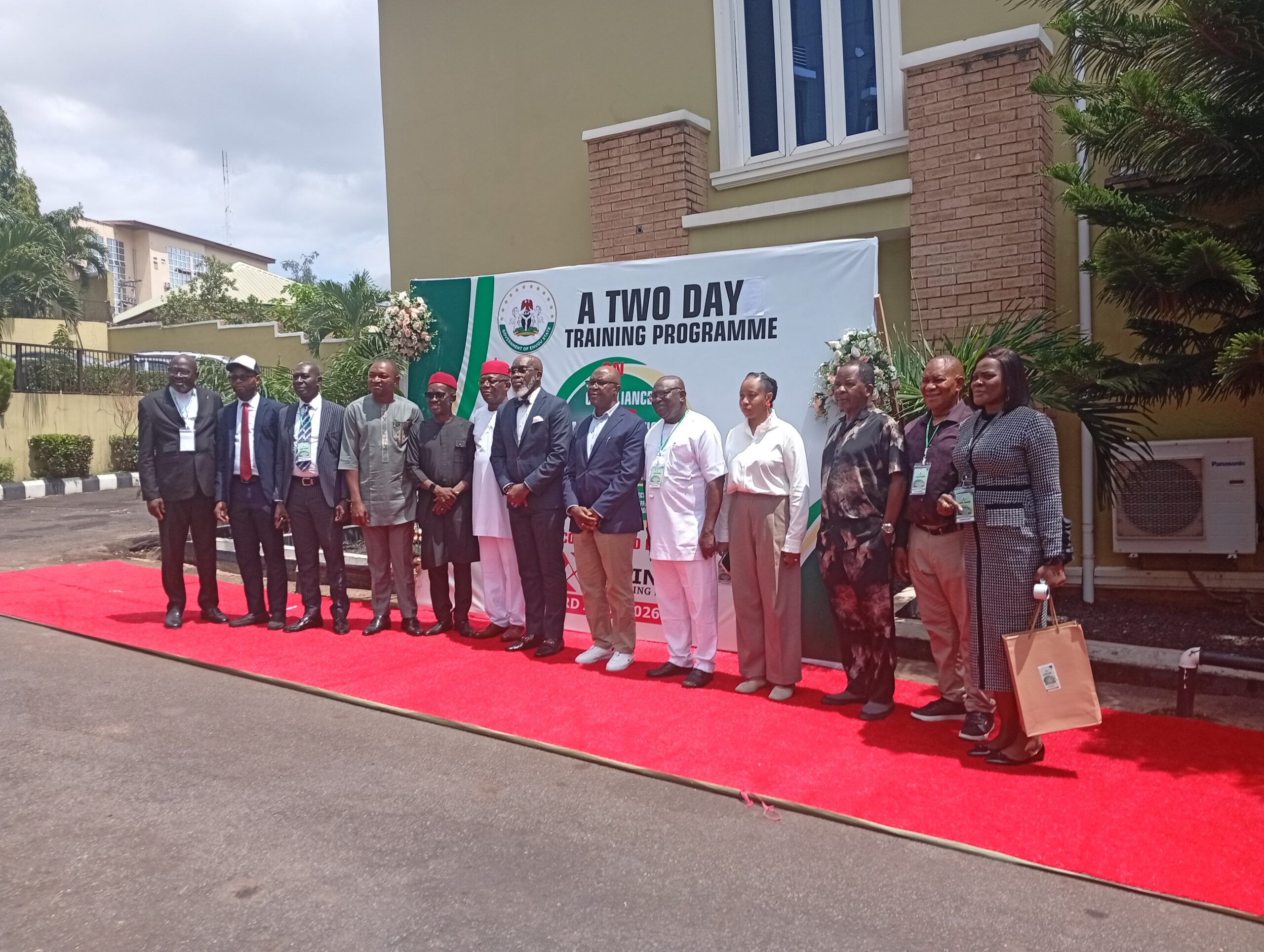
Governor of Enugu State, Dr Peter Mbah, has urged public office holders to embrace the three pillars of his administration—transparency, accountability and traceability—warning that every naira lost to corruption, financial misconduct and non-compliance deprives residents of quality education, healthcare, roads and other critical infrastructure.
The governor made the call on Thursday while declaring open a two-day training on “Compliance with Anti-Corruption Policies and Financial Regulations Frameworks”, organised for political appointees and civil servants in the state to strengthen compliance with anti-corruption laws, financial regulations and emerging tax policies.

Photo: SSG, Prof Chidiebere Onyia addressing the participants on the need to uphold transparency, traceability and accountability
Speaking on the theme, “Enhancing Governance through Compliance: Navigating Anti-Corruption Policies, Financial Regulations and Emerging Taxation Frameworks,” Governor Mbah, represented by the Secretary to the State Government, Prof. Chidiebere Onyia, said the training, organised by the Enugu State Government and facilitated by Xavine Consulting Limited, was designed to equip participants with the knowledge required to uphold ethical standards and improve public sector governance.
According to him, the Mbah administration has built its governance model on the pillars of integrity, transparency, traceability and accountability, which continue to guide procurement processes, e-governance initiatives and financial management across the state.

Participants at the anti- corruption training on Thursday in Enugu
“Every naira lost to corruption, financial irregularities and non-compliance means fewer resources for smart schools, primary healthcare centres, roads and other critical infrastructure. Our governance is built on transparency, traceability and accountability, and compliance begins with knowledge,” Onyia said.
He described corruption as one of the greatest obstacles to development because resources diverted through fraudulent practices directly reduce government’s ability to provide essential public services.
Onyia urged public servants to stay abreast of emerging taxation and regulatory frameworks, stressing that ignorance of the law would no longer be an excuse for non-compliance. He also tasked participants to cascade the knowledge acquired to colleagues in their various Ministries, Departments and Agencies (MDAs) and assured that government would continue to monitor compliance across the public service.

Consultant ,Justin Kuatsea, training participants on the anyi-Corruption policies
Speaking at the event, the consultant, Justin Kuatsea, a Certified Management Trainer and retired Deputy Director of the Independent Corrupt Practices and Other Related Offences Commission (ICPC), said corruption has become deeply entrenched in Nigeria and can only be defeated through collective action and exemplary leadership.
He maintained that the anti-corruption fight must begin with individuals in their homes, workplaces and communities, while political leaders must lead by example by demonstrating integrity and accountability.
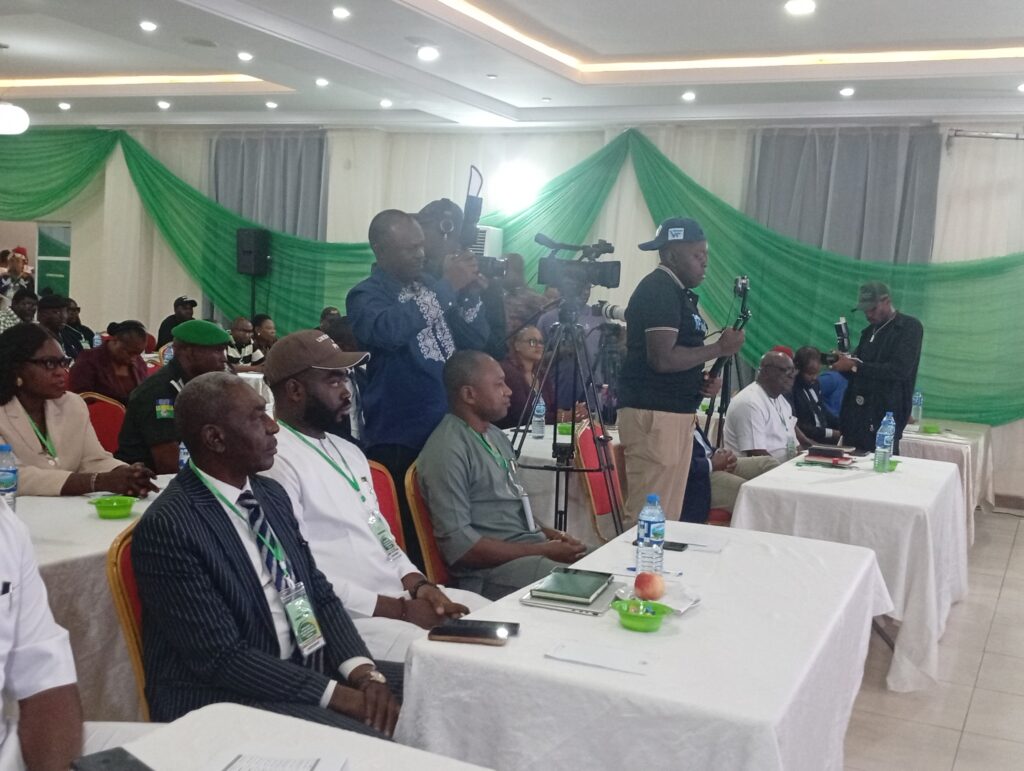
Participants being trained on anti-corruption policies.
Kuatsea identified employment irregularities, recruitment abuses, concealment of official files, irregular promotions, contract inflation, payments for unexecuted contracts and other financial misconduct as common corruption indicators in the public service.
“The fight against corruption must start with individuals, but political leaders must lead by example,” he said
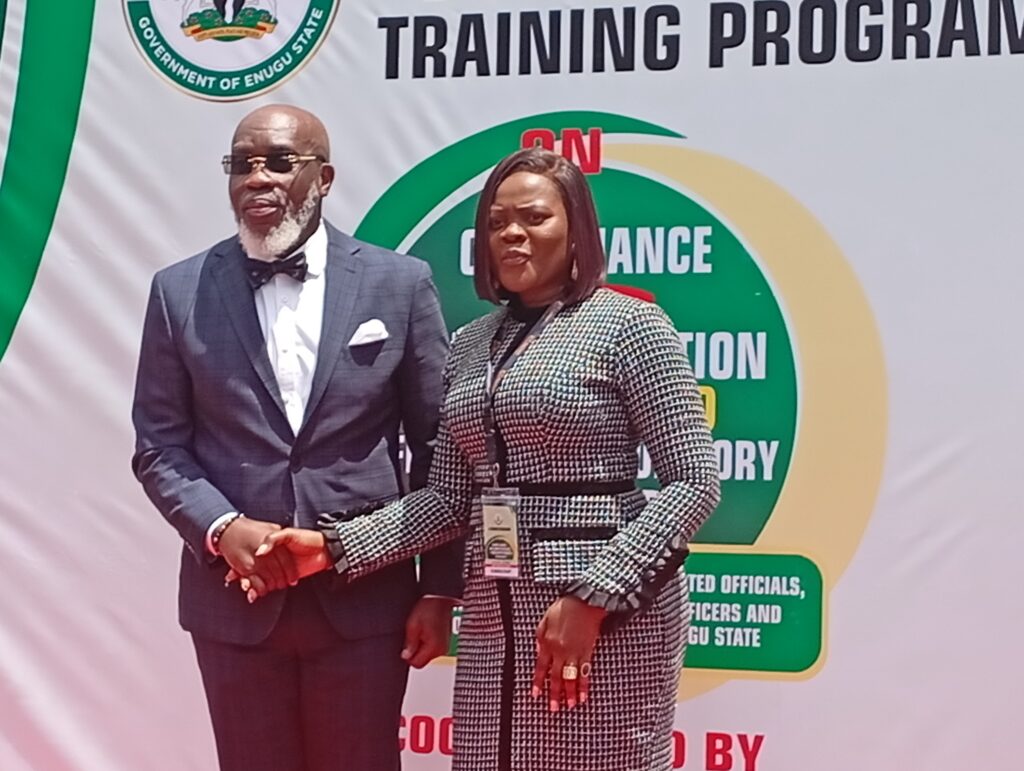
Photo: SSG ,Prof Chidiebere Onyia in a handshake with the MD/CEO of Xavine Consulting Limited, Ms Catherine Kadiri during the training on anti- corruption
Also speaking, the Managing Director/Chief Executive Officer of Xavine Consulting Limited, Catherine Kadiri, said the training was designed to ensure that civil servants fully understand anti-corruption policies, financial regulatory frameworks and emerging taxation laws.
Kadiri said the programme would eliminate ignorance of ethical and operational standards in the public service, noting that participants would gain practical knowledge applicable to their respective roles.

Kadiri fielding questions on the aims of the Training
She disclosed that 16 resource persons, including experts from the ICPC and Nigeria’s financial regulatory sector, were engaged to facilitate the sessions and expose participants to global best practices in governance and compliance.
According to her, the programme aligns with the Enugu State Government’s governance agenda built on accountability, transparency, traceability and integrity, adding that participants are expected to leave with a stronger commitment to ethical conduct and responsible public service.

Participants at the training
“There should be no excuse for non-compliance. This programme is designed to ensure public officers understand the dos and don’ts of governance, financial regulations and anti-corruption frameworks.
“We are also adding integrity to the core pillars so participants leave with the right values to drive good governance,” Kadiri said.