
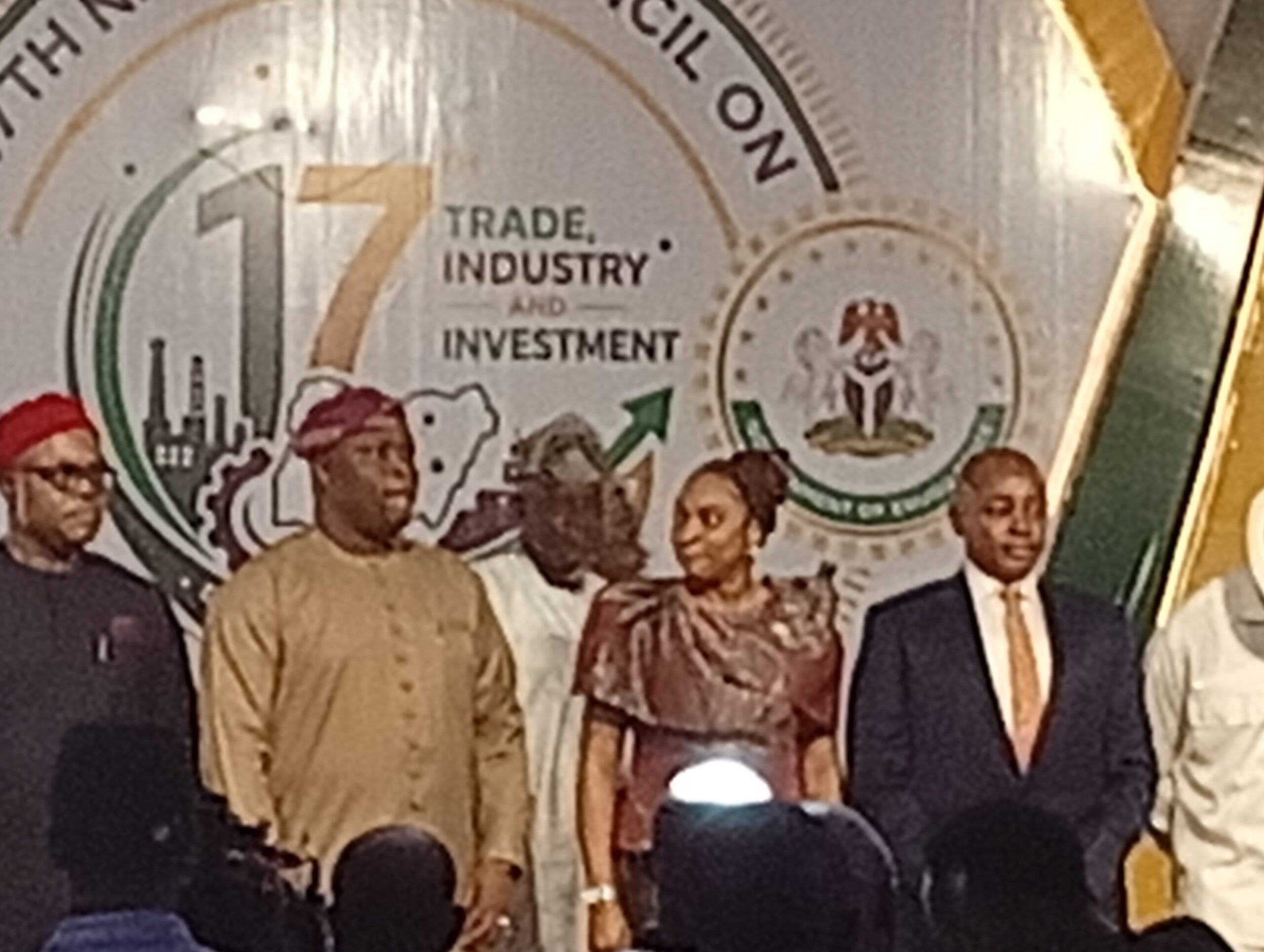
Enugu state Governor, Dr Peter Mbah, minister of Industry, trade and Investment, Dr Jumoke Oduwole and minister of State for Industry, Senator John Enoh have identified access to finance, streamlined regulations and stronger collaboration between the Federal Government and states as critical priorities for driving Nigeria’s industrialisation.
Governor Mbah and the ministers who made this known in their separate speeches at the opening of the Executive session of the 17th National Council on Industry, Trade and Investment (NCITI) held on Wednesday, July 22,2026 at the Presidential hotel , Enugu also urged stakeholders to move beyond policy formulation to measurable economic results.
Delivering a Keynote address at the event, Governor Mbah identified the high cost of finance as one of the biggest obstacles preventing Nigerian businesses and sub-national governments from competing globally.
He noted that businesses cannot compete internationally while borrowing at interest rates above 30 per cent against competitors accessing credit below 10 per cent.
Gov Mbah who was represented by holis Deputy, Ifeanyi Ossai on Wednesday , July 22,2026 called for access to finance, policy implementation and collaboration
Represented by the Deputy Governor, Ifeanyi Ossai, Governor Mbah called for development finance to be treated differently from commercial lending, stressing that governments require cheaper, long-term financing to invest in roads, power infrastructure and other critical enablers that support industrial growth.
He also urged federal financial institutions, including the Bank of Industry and the Nigerian Export-Import Bank, to decentralise lending decisions by empowering their regional offices with approval thresholds instead of concentrating approvals in Abuja.
According to him, regional offices are better positioned to assess businesses, understand local realities and support promising entrepreneurs without imposing unrealistic collateral requirements.
He advocated simpler regulatory processes and reduced bureaucratic bottlenecks, noting that excessive approvals discourage investment and limit business expansion.
“Until we improve access to finance for businesses and provide affordable development finance for sub-national governments, achieving inclusive growth and global competitiveness will remain difficult,” he said.
Earlier, Minister of Industry, Trade and Investment, Dr. Jumoke Oduwole, said Nigeria was shifting from policy formulation to implementation under the Renewed Hope Agenda.
Minister of Industry, Trade and Investment, Dr. Jumoke Oduwole
She disclosed that Nigeria recorded approximately $6.1 billion in non-oil exports, facilitated over $50 billion in foreign direct investment commitments, disbursed more than ₦600 billion through the Bank of Industry and captured over 500,000 Micro, Small and Medium Enterprises (MSMEs) in the national database, while nearly 300,000 Nigerians had benefited from skills development programmes.
Oduwole also said the ministry’s priority was converting reforms into tangible economic outcomes through increased production, job creation, investment and enterprise growth.
Oduwole urged every state to establish dedicated delivery teams, prepare investment-ready projects
She highlighted key priorities identified during the council’s technical sessions, including reliable infrastructure, productive industrial clusters, stronger MSME linkages, simpler trade processes, interoperable digital platforms and innovative financing models.
The minister also said government was strengthening investment facilitation through the Nigeria Investment Policy, noting that 75 per cent of investor issues were resolved on-site during the 2025 Domestic Investment Summit, while outstanding cases were concluded within five working days.
On trade, she said Nigeria was reducing the time, cost and uncertainty facing businesses through reforms under the National Single Window initiative, improved border processes, stronger product standards and expanded market access under international trade arrangements.
She added that the country was promoting manufacturing, agro-processing, special economic zones, technology development, talent export and intellectual property protection to strengthen industrial productivity.
Oduwole urged every state to establish dedicated delivery teams, prepare investment-ready projects, develop exportable products and build commercially viable creative assets to maximise opportunities under the African Continental Free Trade Area (AfCFTA).
She stressed that every resolution adopted by the council must have a clear implementation timeline, measurable outcomes and assigned responsibility.
Also speaking, Minister of State for Industry, Senator John Owan Enoh, described competitiveness as the defining currency of modern economies, saying nations must now compete through productivity, innovation, quality and resilience rather than relying solely on natural resources or population size.
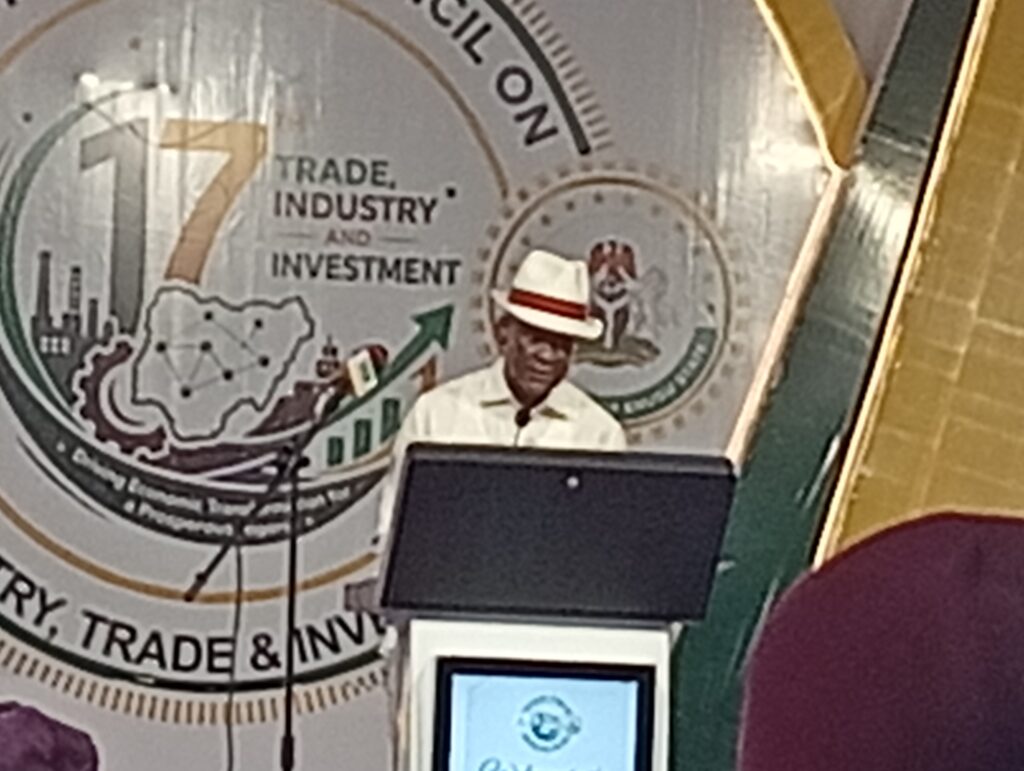
Minister of State for Industry, Senator John Owan Enoh, described competitiveness as the defining currency of modern economies
He said global changes, including climate change, digital technology, artificial intelligence, energy transition and shifting trade patterns, require Nigeria to implement coherent industrial policies capable of positioning the country for future opportunities.
Enoh noted that implementation of the Nigerian Industrial Policy 2025 had already commenced, with progress recorded within its first 90 days through coordinated actions across finance, infrastructure, technology, investment promotion and skills development.
He said the Federal Government was driving implementation through the Industrial Revolution Working Group while ministerial roundtables were focusing on critical issues such as energy security and affordable finance for manufacturers.
The minister also reaffirmed government’s commitment to promoting local value addition, noting that Nigeria could no longer depend on exporting raw materials while importing finished products.
He cited recent efforts to strengthen domestic processing of cocoa and other agricultural commodities, alongside ongoing investments in special agro-processing zones across the country.
Enoh called on more states to develop their own industrial policies in alignment with the national framework, warning that previous industrial plans failed largely because of poor implementation.
He stressed that Nigeria’s progress would ultimately be measured not by speeches or policy documents but by industries built, jobs created, investments attracted and prosperity delivered to citizens.
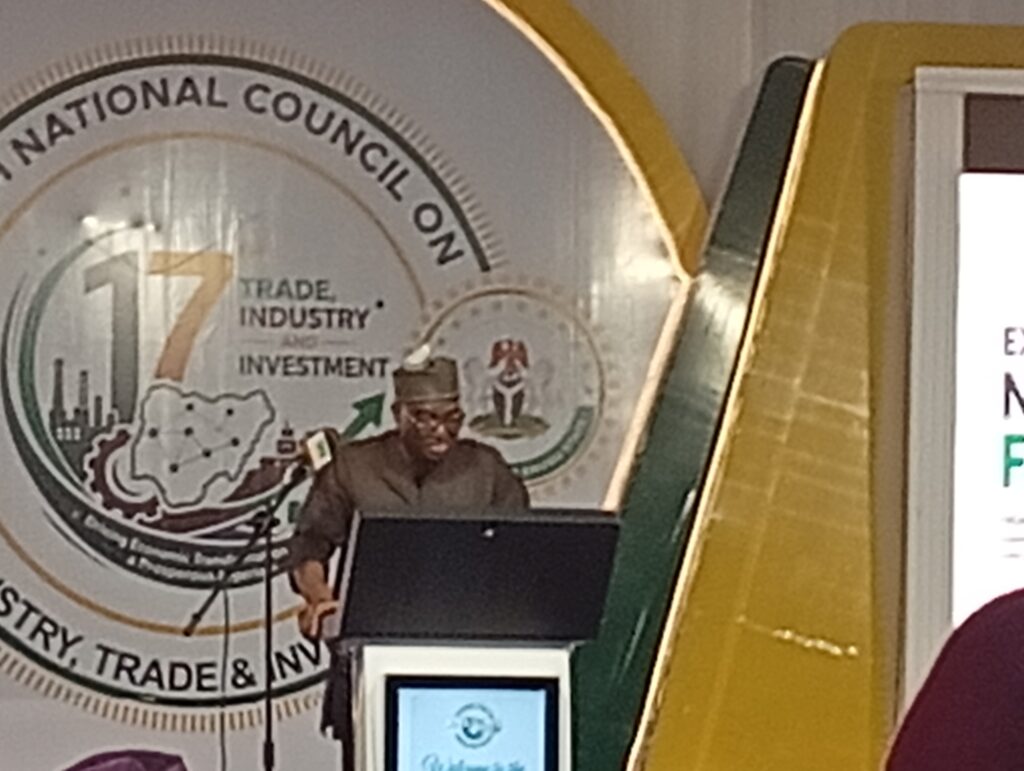
NACCIMA President, Jani Ibrahim,
In their goodwill messages, the Nigerian Association of Chambers of Commerce, Industry, Mines and Agriculture (NACCIMA) urged the Federal Government to ensure the faithful implementation of resolutions from the National Council on Industry, Trade and Investment (NCITI), stressing that businesses need practical reforms that improve competitiveness.
The NACCIMA President, Jani Ibrahim, said competitiveness should be measured by lower production costs, improved access to credit, efficient ports and stronger export capacity. He reaffirmed the association’s commitment to supporting the government’s industrialisation agenda and the drive towards a $1 trillion economy by 2030.
Also speaking, the Nigeria Society of Engineers (NSE) pledged continued collaboration with the Federal Ministry of Industry, Trade and Investment, calling for stronger partnerships among government, the private sector and other stakeholders to boost industrial productivity, attract investment and enhance Nigeria’s global competitiveness.
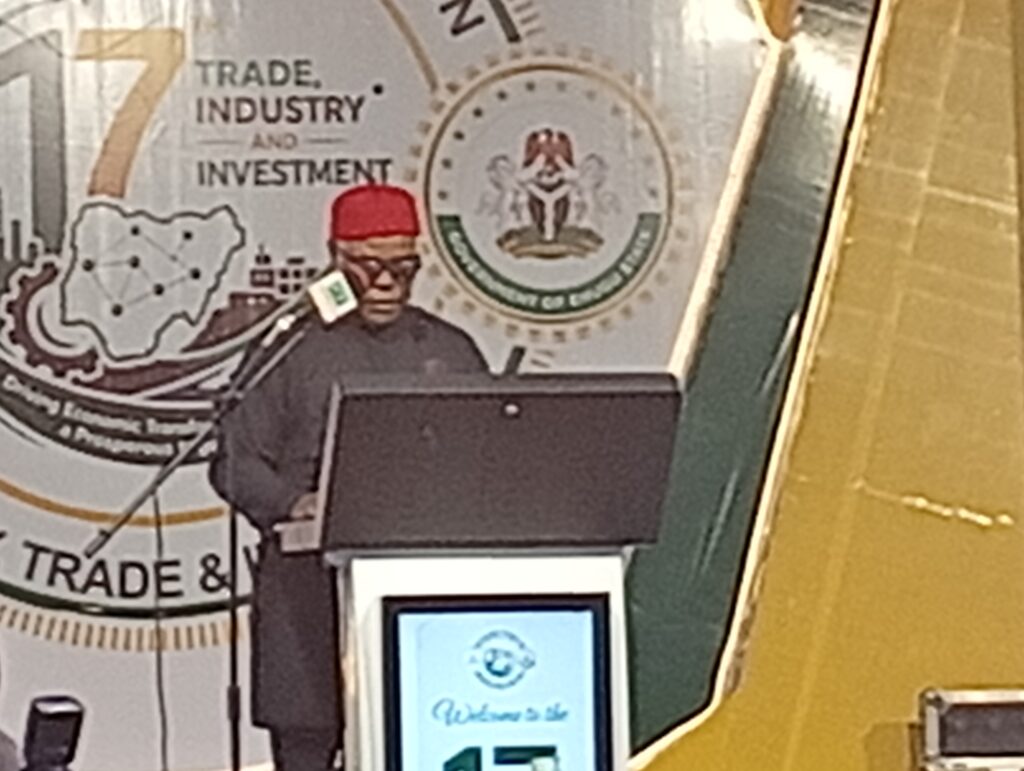
Commissioner for Trade, Investment and Industry in Enugu State, Dr. Sam Ogbu-
Earlier in his welcome address, the Commissioner for Trade, Investment and Industry in Enugu State, Dr. Sam Ogbu-Nwobodo, welcomed delegates from the 36 states and the Federal Capital Territory, describing Enugu as the ideal host for the council.
He described the theme of the 17Th Council as apt and strategic , noting that Competitiveness is essential in the growth of global economy .
The Commissioner disclosed that the Enugu state government through robust investment in security, education, ease of doing business and infrastructure, is open for business.
He urged participants to move beyond rhetoric by proposing practical and measurable solutions to reduce production costs, improve infrastructure, expand financing for micro, small and medium enterprises, harmonise federal and state policies, and attract domestic and foreign investments.
He thanked all their development partners , stakeholders for their partnership, urging strengthening collaboration.

I was suggested this website by my cousin. I’m no longer certain whether or not this post is written through him as no one else know such distinctive approximately my trouble. You’re incredible! Thank you!