….As Enugu’s educational transformation gains international backing
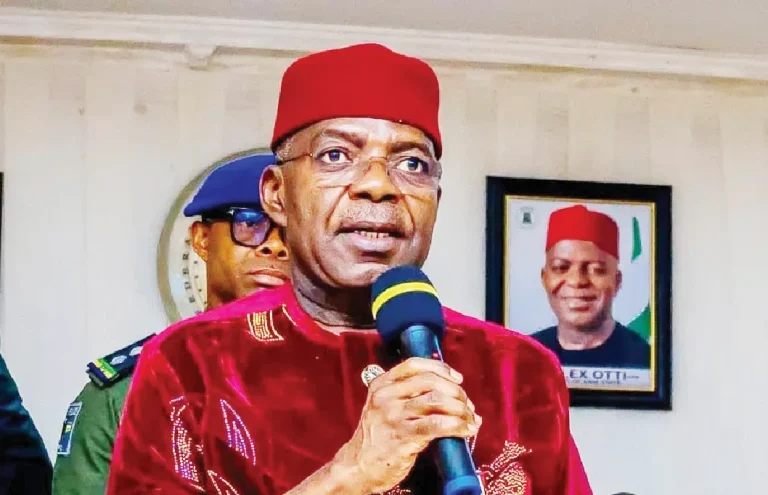
Governor of Enugu state, Dr Peter Mbah has called for treatment of education as a national emergency, saying Nigeria’s ability to eradicate poverty, create wealth and compete in the global economy depends on its capacity to equip its young population with knowledge, critical thinking and practical skills.
He made the call on Wednesday , October 7,2026, at the International Conference Centre, Enugu, while delivering a keynote address titled , “The Audacity of Education Transformation in Nigeria,” at the Three-Day Enugu Education Summit 2026.
Acknowledging the importance of education, Governor Mbah said, “Whatever education costs us today, ignorance will cost us far more tomorrow.” He noted that education was at the root of efforts to end poverty because knowledge and skills determine the ability of individuals to create wealth, secure employment, build enterprises and participate meaningfully in society.
He said his administration’s education reforms were not simply about constructing new schools, but about fundamentally changing the way education was delivered and how children learned, moving from rote learning to experiential learning.
The governor said his administration had the audacity to transform education, building 260 Smart Green Schools, one in each political ward, with more than 7,000 classrooms while deliberately taking the facilities into communities where children had historically suffered educational disadvantages because of geography and circumstan
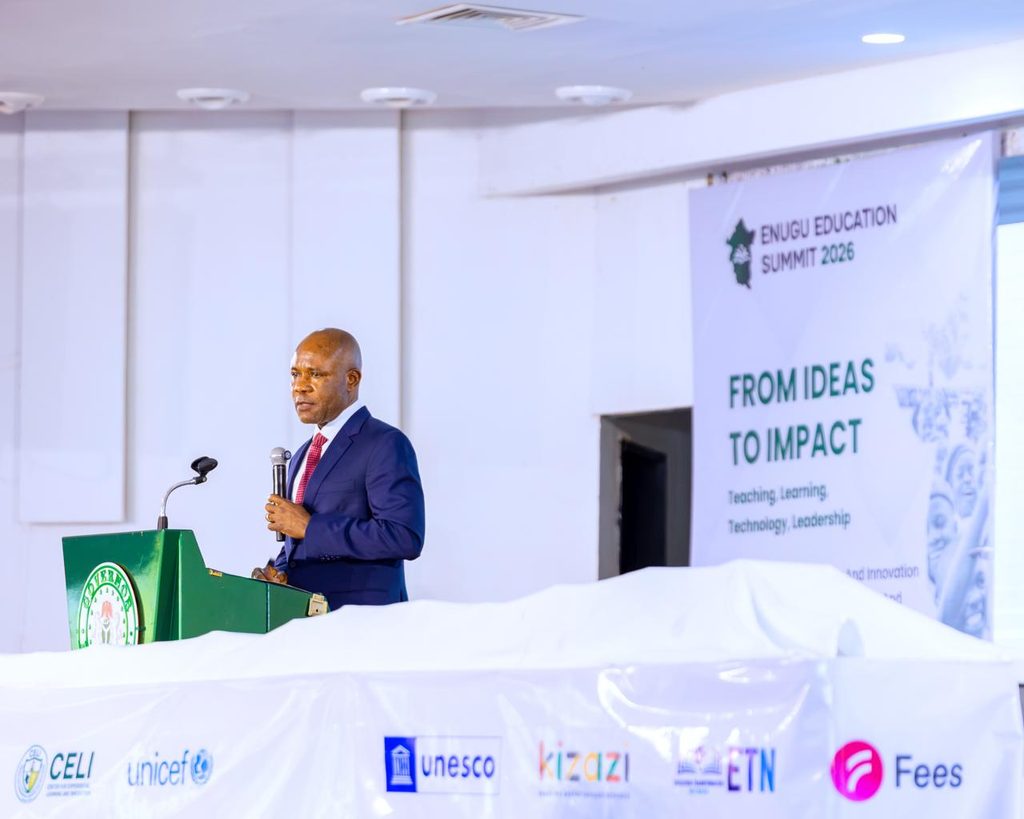
Governor Mbah in his keynote address, called for a national state of emergency on education.
According to him, the state had moved from a traditional model centred on memorisation to an experiential learning system focused on enquiry, collaboration, critical thinking, digital capability and practical application of knowledge.
The governor emphasised on teachers’ development, stressing that no education system could rise above the quality of its teachers. He added that the transformation of physical learning environments must be matched by continuous professional development and a change in teaching culture.
“The buildings may be new, but unless the culture of learning changes with time, we will simply have recreated the whole system inside the more beautiful walls,” he said.
Mbah said teachers were now expected to work with technology, facilitate enquiry, connect learning across disciplines and measure success by what children could actually do with knowledge.
Mbah said the government had invested in teacher development, continuous professional learning and the Centre for Experiential Learning and Innovation to build the human capacity needed to sustain the reforms.
He linked the education transformation to investments in infrastructure and social development, saying more than 1,500 kilometres of roads had been constructed or reconstructed across the same 260 wards where the Smart Green Schools were located.
The governor added that 260 primary healthcare centres had also been built, while the government had taken steps to improve security, water supply and transportation and create an environment conducive to investment and development.
He disclosed that Enugu’s internally generated revenue had risen from about N26 billion in 2022, before his administration assumed office, to more than N400 billion in 2025.
He said the increased revenue had provided the fiscal capacity required to sustain the government’s development programme, stressing that transformation could not survive on aspiration alone.
“Eventually, some money has to pay for it,” he said.
The governor told the gathering that one-third of the state’s annual budget had been committed to education for successive budget cycles, describing the investment as a deliberate choice rather than discretionary spending.
He pointed out that while infrastructure projects could produce visible results within a political tenure, the full benefits of education investment might not be realised until years after the government that initiated them had left office.
“Our responsibility cannot end at the boundary of our own tenure. A child’s education lasts for longer than the tenure of a commissioner or a governor,” he said.
Mbah also warned that Nigeria’s growing youthful population could become either a demographic dividend or a demographic catastrophe, depending largely on the quality of education available to young Nigerians.
He said the country must move from a consumption economy to a creation and knowledge economy where young people could research, design, engineer and produce solutions for Nigeria and the world.
The governor said the question should no longer be whether Nigeria could afford to invest heavily in education, but what would happen if it failed to do so.
He urged the Federal Government, state governments, development partners, communities and the private sector to work together to ensure that every Nigerian child, regardless of where he or she was born, had access to an education capable of preparing them for the future.
Mbah described the education transformation in Enugu as a “quantum leap,” saying the scale of the challenge required an equally ambitious response.
In their goodwill messages, Development partners commended Enugu state government for its transformation in the education sector.
The National Coordinator of the Committee of State Commissioners for Education in Nigeria, Dr Ebenezer Leo, said the committee understood and appreciated what he described as the vision behind Mbah’s education reforms, particularly the emphasis on critical thinking and the revitalisation of basic education in Enugu State.
Leo said Enugu was demonstrating a new approach to basic education by focusing not only on infrastructure but also on the skills and learning outcomes required to prepare children for the future.
Speaking, the UNICEF representative to Nigeria, Wafaa Saeed, said the organisation was committed to ensuring that every child was in school and commended Enugu State for demonstrating commitment through financing, implementation and accountability.
She said UNICEF’s support extended to ensuring inclusion, particularly for children living with disabilities and out-of-school children.
According to her, UNICEF would continue to stand with Enugu State in its efforts to expand access to quality and inclusive education.
The British Council on its part, pledged continued partnership with the Enugu State Government, particularly in strengthening teaching and learning.
The council said it had supported the state in teaching and learning initiatives and would continue working with Enugu to promote foundational learning and improve educational outcomes.
Speaking also, the UNESCO Representative to Nigeria, Dr Isaias Barreto da Rosa, who was represented, said the reforms being implemented in Enugu’s education sector aligned with the United Nations Sustainable Development Goals.
He described the establishment of the 260 Smart Schools as a landmark achievement, noting that the model was designed to equip children with the ability to solve problems, think critically and apply knowledge through experiential learning.
Da Rosa said Enugu’s approach placed teachers at the centre of the education transformation, recognising their critical role in translating new learning models and technologies into meaningful classroom experiences.
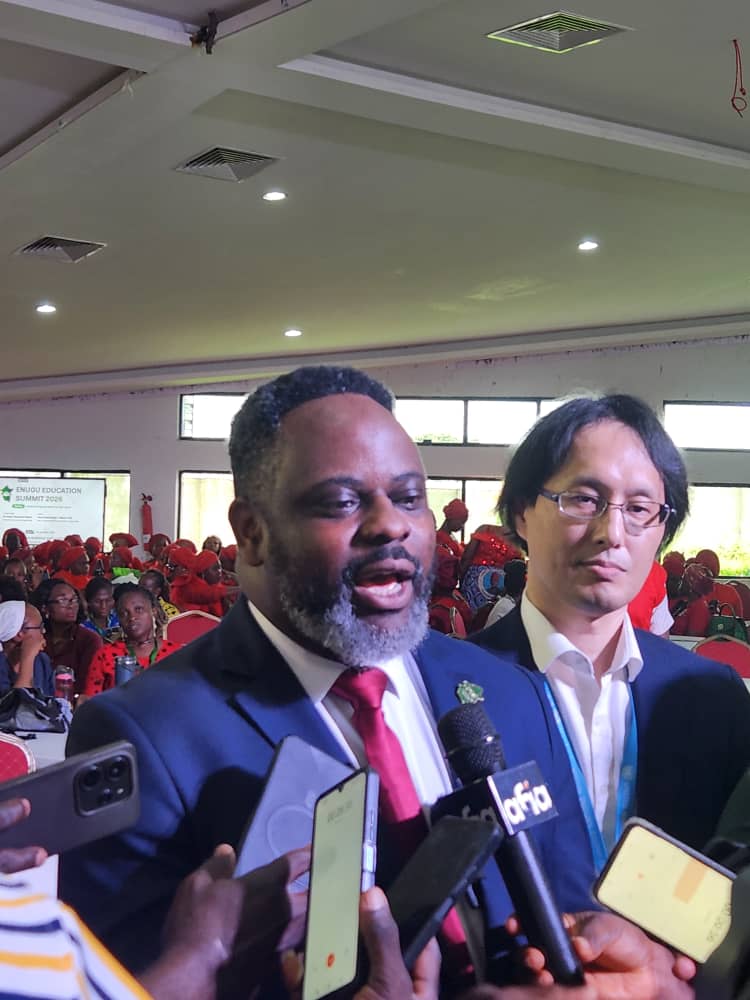
Commissioner for Education, Prof. Ndubueze Mbah
Earlier, the Commissioner for Education, Prof. Ndubueze Mbah, said the state’s education policy was designed as a long-term instrument capable of guiding the sector beyond the tenure of any administration.
He said the policy was developed through workshops, training, capacity building and consultations with stakeholders across Enugu State, with support from UNICEF, UNESCO and the National Institute for Educational Planning and Administration.
According to him, the policy is structured as a 10-to-20-year framework, supported by sector operational plans and implementation guidelines covering shorter periods.
The commissioner described the summit as an international validation of Enugu’s experiential learning-based education reforms, saying education leaders and development partners had recognised the model as one capable of serving as a reference for other states and the Federal Government.
He called for sustained leadership and continuity to ensure that the reforms remained effective and continued to deliver results.
The three-day summit brought together education leaders, policymakers, development partners, teachers, private school proprietors, industry leaders and other stakeholders to deliberate on the future of education in Nigeria.
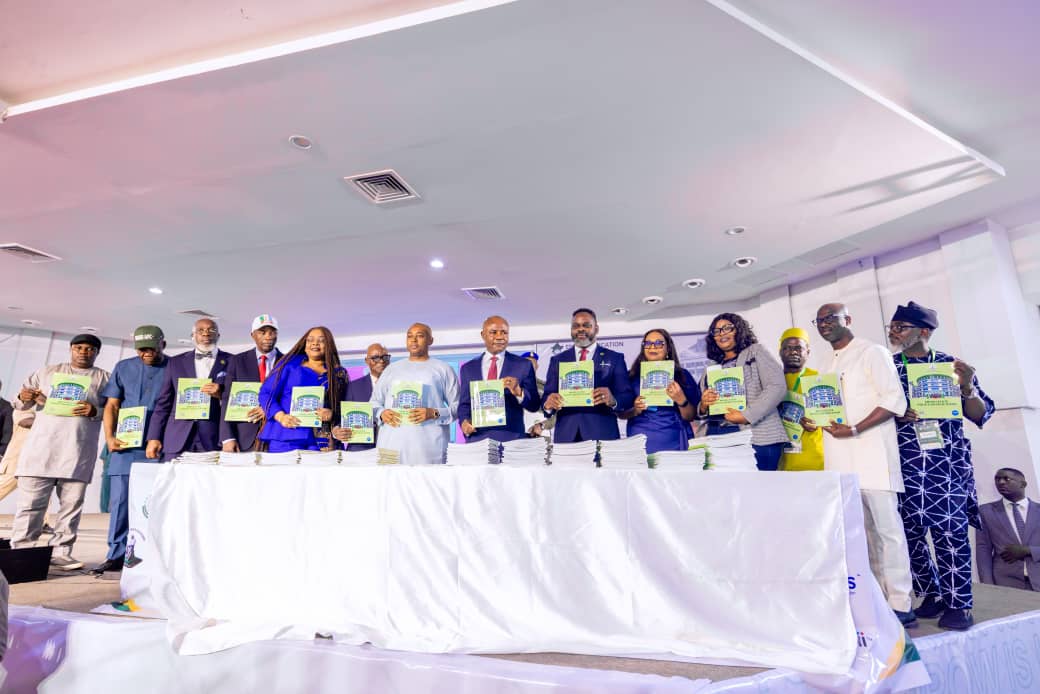
Highlights of the event were the unveiling of the Enugu state education policy and the exhibition of robots , drones and other items by the Smart Green school, Owo, Nkanu East Local Government Area, Enugu state.