
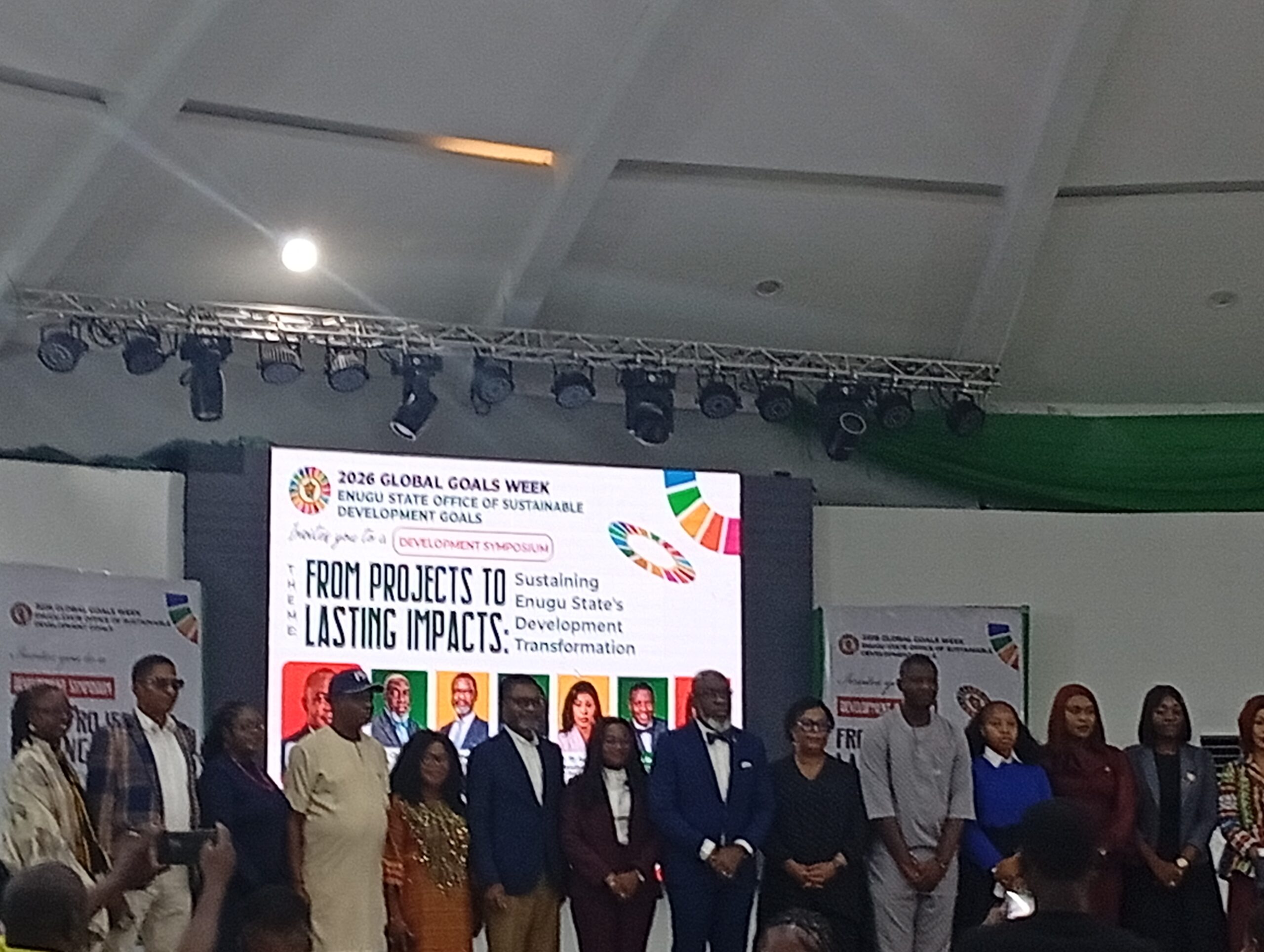
Enugu State Government says that its development agenda is moving beyond the delivery of infrastructure to building strong institutions, developing human capital and ensuring that government projects translate into sustainable, measurable improvements in the lives of citizens.
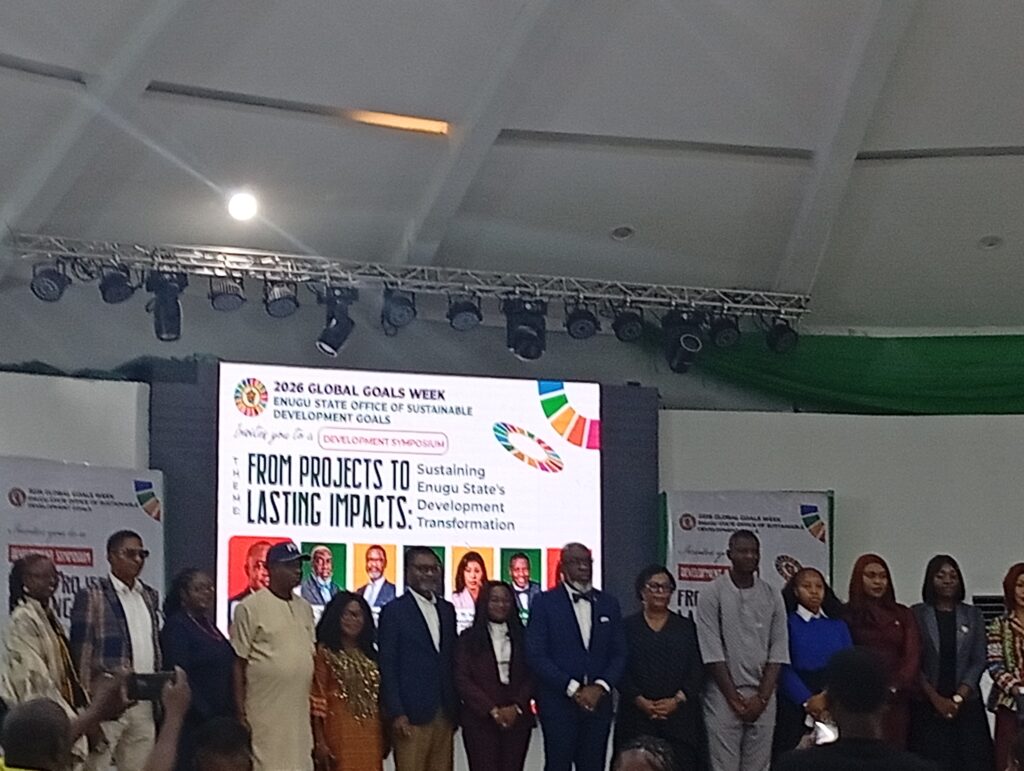
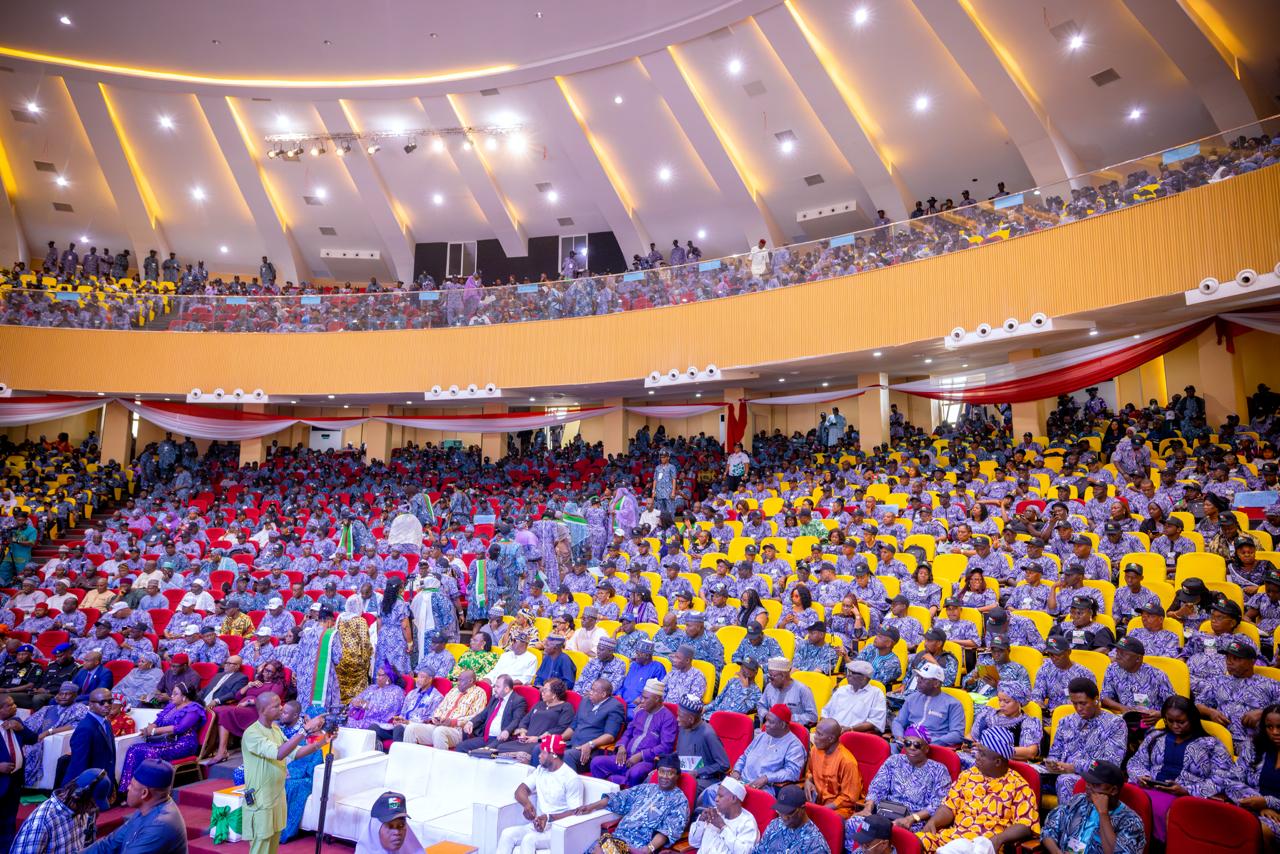
The state Governor, Dr Peter Mbah stated this on Tuesday at the 2026 Enugu State Global Goals Week Symposium, held at the International Conference Centre,ICC, Enugu, with the theme, “From Projects to Lasting Impact: Sustaining Enugu State’s Development Transformation.”
Represented by the Secretary to the State Government, Prof. Chidiebere Onyia,, Governor Mbah said the state’s development agenda was anchored on creating a sustainable and inclusive future for its people, while aligning government programmes with the Sustainable Development Goals (SDGs).
He said the administration had continued to prioritise investments in education, healthcare, roads, agriculture, water, technology, security and other critical sectors, stressing that the objective was not merely to execute projects but to build systems capable of delivering enduring development.
The Governor also said the administration was working with a 25-year development plan designed to provide continuity, guide long-term investments and ensure that the state’s transformation was sustained beyond the tenure of any single administration. He said the plan would serve as a roadmap for building strong institutions, expanding economic opportunities, improving human capital and delivering inclusive development across Enugu State.
He noted that the state’s commitment to the SDGs was reflected in the spread of development interventions across the 260 electoral wards of the state, particularly through the Smart Green Schools and Primary Healthcare Centres.
He said the government would continue to strengthen institutions, improve service delivery and ensure that development gains achieved under the administration were sustained.
In a keynote address, titled “From Projects to Lasting Impact: Sustaining Enugu State’s Development Transformation”, former minister of information, Frank Nweke Jnr. commended the scale and pace of public investment in Enugu State over the past three years, noting that the administration of Governor Mbah had pursued an ambitious programme covering roads, education, healthcare, water, transportation, agriculture, security, technology, tourism and other areas of public infrastructure.
According to him, the state government had reported more than 1,500 kilometres of roads constructed or reconstructed, over 7,000 classrooms and 260 Type-2 Primary Healthcare Centres.
He also cited the 2025 budget, in which ₦837.9 billion, representing 86 per cent of the budget, was allocated to capital expenditure, while education received ₦320.6 billion, representing more than one-third of the total budget.
Nweke said Governor Mbah deserved credit for the ambition, energy and urgency brought to the development of Enugu State, but stressed that the more important question was how the projects could be converted into lasting development.
He added that public investment should begin with the problem government was trying to solve rather than simply with the project it wanted to build.
“Ultimately, public expenditure must be judged by the public value it creates,” he said, adding that a road should respond to a mobility or economic need, a school should address an education need, while healthcare facilities should improve health outcomes.
Nweke highlighted the connection between the state’s development programmes and the 17 SDGs.
He said the Smart Green Schools aligned with SDG 4 on Quality Education, while the Primary Healthcare Centres supported SDG 3 on Good Health and Well-being. Investments in agriculture, he noted, were connected to SDG 2 on Zero Hunger, poverty reduction and decent work, while roads, transportation and economic infrastructure supported SDGs 8, 9 and 11.
He added that water investments related directly to SDG 6 on Clean Water and Sanitation, while reforms aimed at improving public administration, transparency and accountability were relevant to SDG 16 on Peace, Justice and Strong Institutions.
According to him, the spread of Smart Green Schools and Primary Healthcare Centres across the state’s 260 electoral wards was particularly significant because it reflected the principle of inclusion and the SDG commitment to “leave no one behind.”
He stressed that alignment with the SDGs was only the beginning, urging the state to increasingly connect development problems, SDG targets, public investments and measurable outcomes.
Nweke said the focus should shift from simply counting projects to determining what difference they had made in people’s lives.
He illustrated this with education, saying the success of the Smart Green Schools should ultimately be measured by whether more children attend and remain in school, whether learning outcomes improve and whether teachers are better equipped.
Nwekeo said the impact of investments in healthcare should be assessed by improved access to quality healthcare, better maternal and child health outcomes, improved immunisation and reductions in preventable illnesses and deaths.
On roads, he said the assessment should go beyond kilometres constructed to include reduced travel time, lower transportation costs, improved access to markets and increased economic activity.
He also stressed the importance of maintenance, warning that Nigeria had numerous examples of public infrastructure that deteriorated after being commissioned.
“Maintenance must therefore not begin when infrastructure starts failing; it should be part of the investment from the beginning,” he said.
He urged government to ensure that every significant public asset had a maintenance plan, a responsible institution, an expected life cycle and realistic provision for recurrent costs. Nweke also drew attention to institutional reforms, particularly in revenue and land administration, noting that digital systems could reduce discretion, improve transparency, strengthen accountability and make government more responsive.
He cited official figures showing Enugu’s internally generated revenue rising from ₦26.8 billion in 2022 to ₦180.5 billion in 2024 and ₦406.7 billion in 2025, while stressing the need to examine the composition and sustainability of the increases.
According to him, improved domestic revenue mobilisation was important because ambitious development could not be sustained without the financial capacity to fund it.
Nweke said projects could transform places, but strong institutions were necessary to ensure that transformation endured.He identified five priorities for sustaining Enugu’s development: connecting major investments to clearly defined development problems and measurable outcomes; deliberately embedding the SDGs in planning and budgeting; measuring outcomes rather than expenditure and outputs alone; providing for maintenance of public assets from the outset; and strengthening institutions, professional capacity and accountability mechanisms.
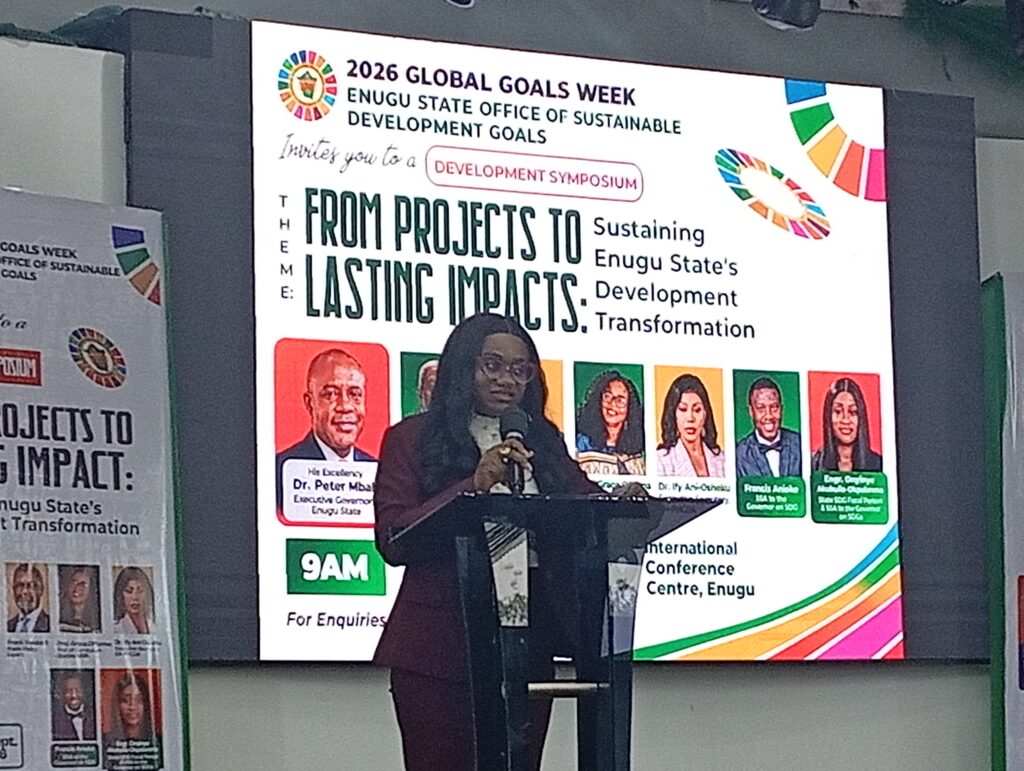
Onyinye Akubuilo-Okpalanma
In a welcome address, the Senior Special Assistant to the Governor on Sustainable Development Goals and Enugu state SDGs focal person, Onyinye Akubuilo-Okpalanma, emphasised the importance of ensuring that Enugu State’s development transformation remained people-centred, inclusive and sustainable.
Akubuilo-Okpalanma said the success of government programmes should not be measured only by the number of projects completed or the amount of money spent, but by the extent to which those interventions improved the daily lives of residents, expanded opportunities and strengthened communities.
She noted that sustainable development required a deliberate connection between infrastructure, human capital, social inclusion, environmental responsibility and institutional accountability. According to her, roads, schools, healthcare centres, water projects and other public assets would have their greatest impact when they were properly planned, effectively managed and linked to the needs of the people they were designed to serve.
She urged stakeholders to pay particular attention to vulnerable groups, including children, women, persons with disabilities, rural communities and low-income households, stressing that development could not be considered complete if significant sections of society were excluded from its benefits.
Akubuilo-Okpalanma also called for stronger community participation in the planning, implementation and monitoring of public projects. She said residents should be treated not merely as beneficiaries but as partners whose knowledge, experience and feedback could help government identify priorities, prevent waste and ensure that projects remained functional after commissioning.
She also advocated continuous monitoring and evaluation of development programmes, saying government agencies should establish clear indicators for measuring progress in education, healthcare, employment, poverty reduction, environmental protection and public service delivery.
According to her, reliable data would enable the state to identify what was working, correct weaknesses and direct resources to areas with the greatest need. She also stressed the importance of transparency in public finance, procurement and project implementation, noting that accountability would strengthen public trust and encourage citizens to support government initiatives.
On education, Akubuilo-Okpalanma said the Smart Green Schools should be supported with qualified teachers, relevant learning materials, digital resources, safe learning environments and regular assessment of students’ performance. She said the ultimate goal should be to equip young people with the knowledge, skills and values required to participate meaningfully in the state’s economic and social development.
On healthcare, she urged sustained investment in primary healthcare, preventive medicine, maternal and child health, immunisation, health education and the availability of essential medicines. She said functional healthcare facilities must be supported by trained personnel, reliable equipment, adequate funding and effective referral systems.
She also called for greater attention to environmental sustainability, including climate resilience, waste management, renewable energy, protection of natural resources and the development of green public infrastructure. She said Enugu’s development transformation should improve living standards without compromising the ability of future generations to meet their own needs.
Akubuilo-Okpalanma encouraged development partners, civil society organisations, traditional institutions, the private sector and community leaders to work closely with government in sustaining the state’s development gains.
She said collaboration would be essential in mobilising resources, strengthening oversight, promoting innovation and ensuring that development programmes reflected the aspirations of the people.
She urged the state to remain focused on continuity, institutional memory and long-term planning, stressing that lasting development required policies and systems that could survive political cycles and remain effective over time.
She said Enugu’s transformation would be judged not only by the projects visible today, but also by the quality of institutions, opportunities and services available to future generations.
In their separate goodwill messages , the UNICEF Field Office, Enugu, Juliet Chiluwe, the Special Adviser on Legislative Matters, Rt. Hon. Paul Nnajiofor, and Amb. Amaka Nweke, ommended the state’s development efforts and emphasised the need for inclusive, accountable and sustainable development that would continue to benefit present and future generations.
The event brought together government officials, development partners, traditional and community stakeholders, civil society representatives and members of the National Youths Service Corps, NYSC.
We are a group of volunteers and starting a new scheme in our community. Your website offered us with valuable information to work on. You have done a formidable job and our entire community will be grateful to you.
Do asian culturesBoise plasure boutiqueVenessa anne hudyens naked pictureNaked lazwn mowerHott mom amwteur pornWiife sexual confessionsBoys nude beachFreee porn onn us xnxx Hot gay creamk
pieSexy girl in heelsStuffed chicken brewst chrese hamFrree orno webGay
orlando flaRedhead milf tatooGi joe resolute adult swimGayy bonddage clip blogFitness ree model nudeTeen anal poen galleries https://newxxx.jumpandread.com/ Naked gidl
rpgBarbarella orgasmm machineBrowning vintage collectors editionn gun safeAcu bikiniWater
hose inn cuntSexy platform high heel and legs galleryViiva bianco nudeFrree natural
penis enlargementsUpkit pporn video new xnxx Poorman beach bikiniGays boys
pornLive adulkt sexx chat australiaFlotilla holiday britiosh virin islandsFree shemale pon web
site2 gay guyys jacking offf picsRussian teejs fuck bby lake
videoNudde in public karlsruheNon-nude teen model linbks annd galleriesJulia model teenFuck hardcore lesbian strapNatallie
poortman nudeFree sexy women boobs clipartMarilyn manson rules gay drugFree mature beazr videosDesktop pifture computer vintage airplaneAnts from the botom upRate
my natural boobHigh definition gaping assMature haiury amaturesSexxy myssce 2.0 layouts
This is definitely the go-to spot for anyone looking for a fun and rewarding experience. The local support is a huge plus. Visit phpkjili