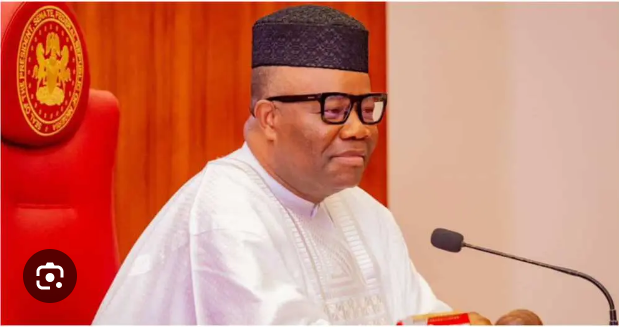
Senator representing Edo North, Adams Oshiomhole, on Thursday slammed the Senate President Godswill Akpabio as the Senate rescinded parts of its controversial Standing Orders 2026 following concerns over constitutional inconsistencies., calling for his resignation.
The reversal came barely days after the senate amended parts of its rules to impose stricter eligibility requirements for senators seeking principal offices, including the Senate Presidency and Deputy Senate Presidency.
Leading the criticism, Oshiomhole accused the Senate leadership of rushing the amendment process to satisfy vested political interests ahead of the 2027 political permutations.
“The way we rushed the rules because certain people wanted certain things concluded is one flaw in this process. Next time we should allow debate,” he said during plenary.
The former Edo State governor also called on Akpabio to resign, arguing that the proposed rules created a “moral crisis” because the Senate President himself would not qualify under the same conditions being introduced for future contestants.
According to Oshiomhole, Akpabio did not complete two consecutive Senate terms before emerging Senate President and therefore lacked the moral authority to supervise such amendments.
The controversial amendments had generated widespread debate within the Senate, especially amid growing interest by outgoing governors and political heavyweights seeking seats in the 11th National Assembly ahead of 2027.
During plenary, Senate Leader Opeyemi Bamidele moved a motion seeking the rescission of portions of the amended rules after a fresh legislative and constitutional review reportedly revealed conflicts with Section 52 of the 1999 Constitution.
Bamidele explained that the Senate retained the parliamentary authority to revisit and reverse earlier decisions where necessary to preserve the integrity of its proceedings.
The motion was seconded by Senator Enyinnaya Abaribe and adopted by the chamber.
Deputy Senate President Jibrin Barau, who presided over the session, described the move as necessary to align the Senate’s rules with constitutional provisions.
However, Oshiomhole maintained that the amendments were politically motivated and aimed at restricting the pool of eligible contenders for top Senate positions.
He also referenced former Senate President David Mark, questioning why rules that enabled Mark to serve for eight years were now being altered.
Meanwhile, Chairman of the Senate Committee on Judiciary, Human Rights and Legal Matters, Adeniyi Adegbomire, dismissed reports that the Presidency pressured the Senate into reversing the amendments.
According to him, the decision followed internal legislative review and concerns over constitutional implications, particularly regarding whether senators-elect must first take their oath before participating in the election of Senate presiding officers.
Despite rescinding parts of the amendments, the Senate retained provisions establishing a ranking structure for the emergence of presiding officers and other principal officers in the upper chamber.
Oshiomhole calls for Akpabio’s resignation as Senate reverses controversial rules