
….As EERC urges consumers to report poor services and Mainpower promises network, billing reforms
Enugu State Government has announced plans to commence work on a 700-megawatt clean energy generation project, promising affordable and reliable electricity for residents as it moves to address persistent power supply challenges across the state.
The state government also plans to extend electricity stakeholder engagements to all 17 local government areas to identify communities experiencing prolonged outages and incorporate their complaints into policies aimed at transforming the state’s electricity market.
The Commissioner for Energy and Mineral Resources, Enyinna Franklin Ogbonna disclosed this on Thursday , November 36,2026, during a stakeholders’ town hall meeting on the Enugu electricity market organised by the Enugu Electricity Regulation Commission(EERC), at Nsukka.
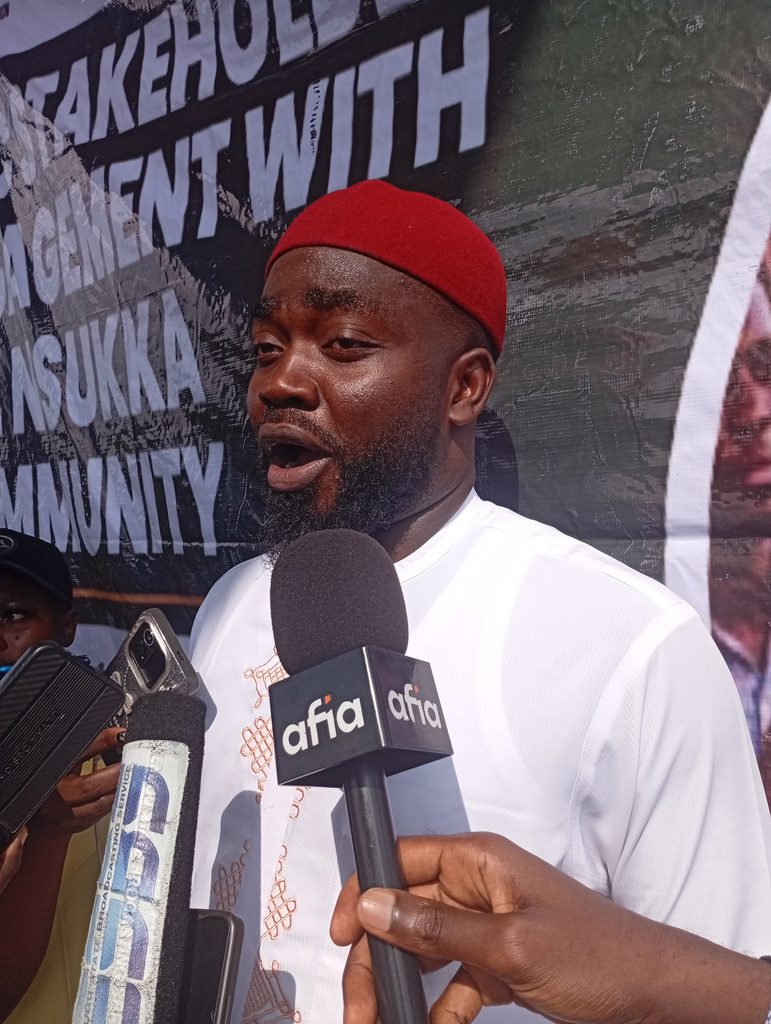
Commissioner for energy and mineral resources, Hon Enyinnaya Franklin Ogbonna
At the meeting, where residents, community representatives, regulators and electricity service providers discussed challenges affecting power distribution and access.the Commissioner described electricity as a critical driver of economic growth and industrialisation, adding that the state’s ambition to grow its economy to $30billion would require a stable and affordable power supply.
He said the government was committed to ensuring that no child in Enugu would continue to study with a lamp, adding that the planned 700MW generation project would provide electricity to communities and support businesses and industries.
According to him, the engagement was designed to bring the electricity market closer to the people, particularly community leaders and residents who often do not understand the channels for resolving electricity-related complaints.
“We want to do this in 17 local governments, get in touch with the PGs because these are citizens of Enugu State. They have rights, and the service providers have rights too,” he said.
Ogbonna explained that the ministry would collate complaints and feedback from the communities and present them to Governor Peter Mbah for immediate action.
He added that the government was working to make Enugu a preferred investment destination by providing electricity at affordable rates, noting that the state possessed the resources required to fuel its planned power generation.
The commissioner acknowledged that many of the electricity challenges raised by residents were inherited problems but maintained that the present administration was determined to address them through the newly established subnational electricity market.
Also speaking, the Managing Director, Enugu State Electricity Regulatory Commission (EERC) Chijioke Okonkwo, explained that the commission, which commenced operations in late 2024 following the transfer of regulatory responsibilities from the Nigerian Electricity Regulatory Commission, was established to ensure efficient, reliable and sustainable electricity services.
He said the commission had been engaging critical stakeholders, particularly consumers, to educate them on their rights and responsibilities, including the need to pay electricity bills, protect electricity infrastructure and report faults promptly.
Okonkwo emphasised that consumers were not restricted to dealing only with their electricity distribution companies, as they could escalate unresolved complaints to the independent regulatory agency.
According to him, the commission serves as an impartial regulator between electricity consumers and service providers, ensuring that operators meet required standards and deliver services that satisfy customers.
He urged residents to report cases of poor service delivery, maltreatment and other electricity-related challenges, assuring them that the commission would deploy its regulatory powers to ensure appropriate action.
The. EERC Managing Director said the commission was accessible through its contact channels and website, adding that it was committed to responding promptly to complaints across the state.
In his remarks, the Special Adviser to the Governor on Energy and mineral resources ,Joe Aneke ,said the town hall meeting reflected the Peter Mbah administration’s commitment to participatory governance and direct engagement with communities.
He disclosed that four communities were being connected to captive power through partnerships involving German development agency GIZ and the European Union.
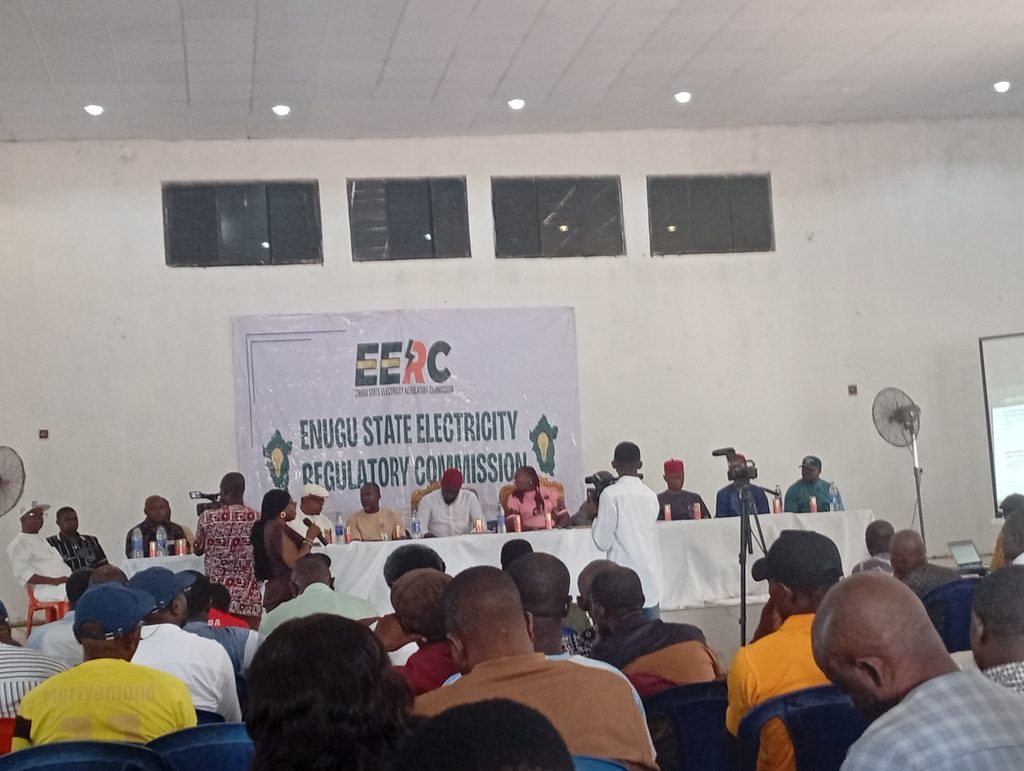
Stakeholders at the meeting held on Thursday , November 26,2026 in Nsukka.
He added that about 29 primary healthcare centres were receiving similar support through the partnership.
Aneke said the engagements would enable the government to identify underserved communities and incorporate their needs into electricity policies and intervention programmes.
He described the establishment of Enugu’s subnational electricity market as a major step towards improving power supply, noting that other states were studying the model.
The Special Adviser urged residents to support the State Government’s electricity agenda, expressing confidence that the ongoing interventions would improve access to electricity across the state.
On his part, the Managing Director of Mainpower Electricity Distribution Limited, Dr Ernest Mupwaya, explained that the EERC and the distribution company had distinct but complementary responsibilities.
He said EERC is the regulator responsible for issuing licences, establishing operational guidelines and monitoring compliance, while Mainpower was responsible for electricity distribution and service delivery to customers.
Speaking with newsmen, Mupwaya said when consumers have challenges, they were expected to first report complaints to the distribution company, and retained the right to escalate unresolved issues to the regulatory commission.
On the significance of the town hall stakeholders’ meeting, he said the meeting provided an opportunity for the company to hear directly from customers, although many of the challenges raised were already identified in its strategic plan.
He listed network deficiencies, billing and commercial issues, vandalism and customers’ unwillingness to pay as some of the factors affecting effective electricity distribution.
The Mainpower chief executive said the company was implementing plans to address the challenges and improve service delivery, with the long-term objective of achieving 24-hour electricity supply.
He stressed the need for cooperation among consumers, regulators and service providers to ensure the successful transformation of the electricity market.