
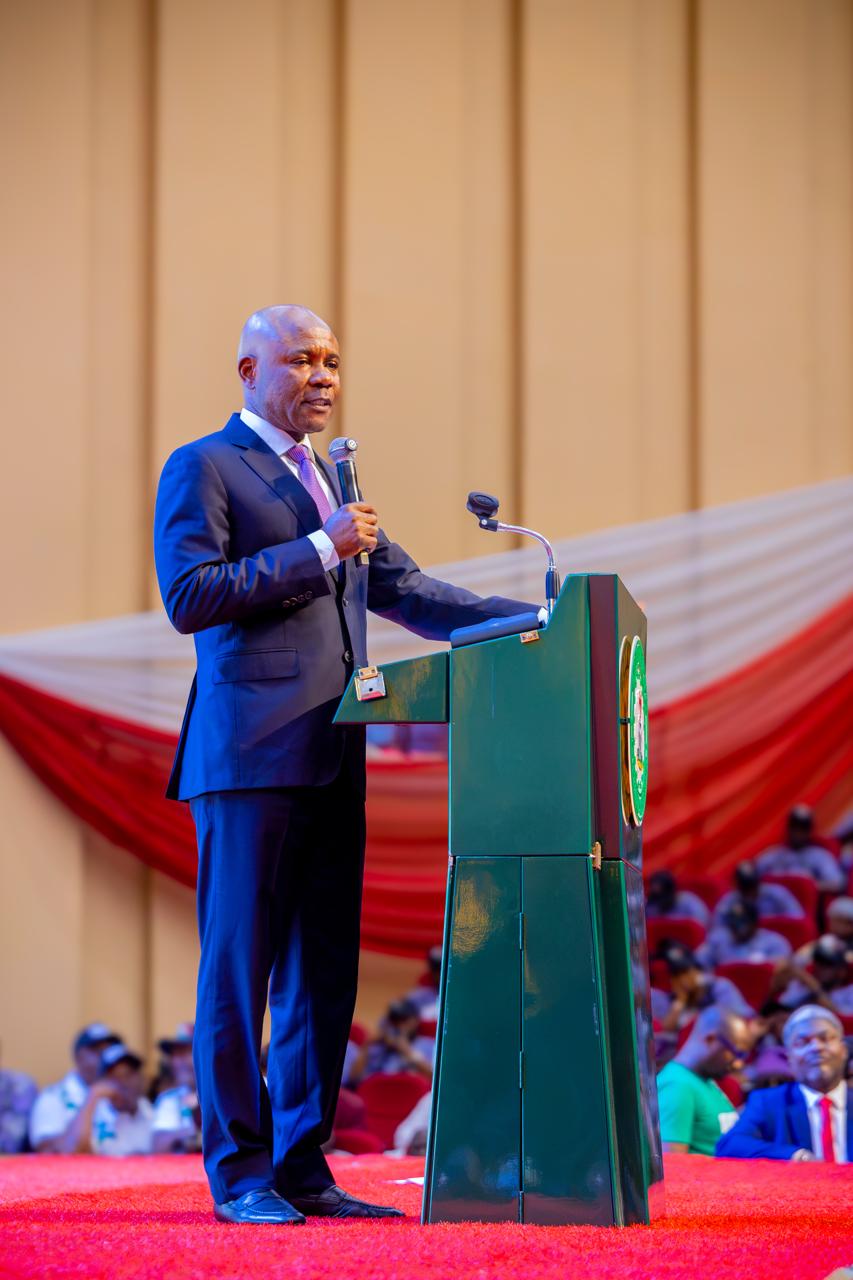
Enugu State Government has commenced the development of a 25-year strategic plan designed to drive sustainable social, and economic growth, accelerate technological advancement and align the state’s development priorities with the United Nations Sustainable Development Goals (SDGs).
The initiative, flagged- off at a stakeholders’ engagement held on Tuesday , October 13,2026 at the International Conference Centre, Enugu, seeks to establish a long-term development framework that will guide successive administrations, promote policy continuity and improve the quality of life of residents.
It brought together representatives of the health sector, education, agriculture, media, business, organised labour, academia, youth groups and community leadership to contribute to a development blueprint reflecting the aspirations and needs of the people.
Flagging- off the exercise , the Governor of Enugu state, Dr Peter Mbah , who was represented by the Secretary to the state Government,Prof Chidiebere Onyia, who was also represented by the Commissioner for Special Duties, Emeka Ajogwu, said the plan was not intended to be an exclusive government document but a collective vision that citizens would help formulate, own and sustain.
He explained that the objective was to establish a clear development direction for Enugu over the next 25 years, ensuring that the state’s priorities would not be abandoned whenever political leadership changed.
Stakeholders at the evemt
Mbah said the participation of stakeholders across different sectors was essential to identifying the needs of the people, setting development priorities and building a framework that future administrations could implement.
He noted that the plan was particularly important for future generations, stressing that decisions taken today must anticipate the needs of children who would become adults during the period covered by the blueprint.
According to him, effective planning requires the active participation of public institutions, traditional rulers, community leaders, the organised private sector, civil society organisations, development partners, youths, women, persons with disabilities and professionals.
He maintained that government could not plan effectively in isolation, noting that contributions from diverse stakeholders would help identify development gaps, assess emerging opportunities and determine interventions capable of delivering the greatest benefits to the people.
The SSG urged participants to be frank, constructive and forward-looking in their submissions, encouraging them to examine the challenges facing their communities, the potential of local economies, the quality of public services and opportunities for job creation, institutional strengthening and environmental sustainability.
He said the objective was to produce a realistic, inclusive and evidence-based development plan capable of delivering lasting impact across the state.
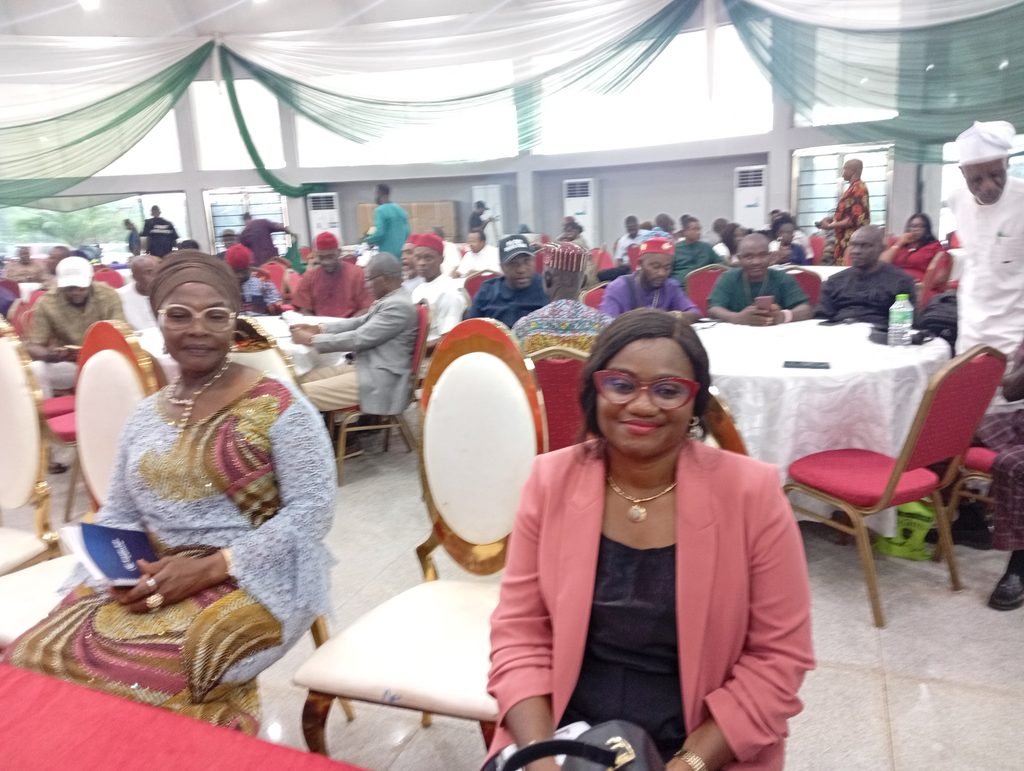
Chairman, STVMB, Dr Amaka Ngene ( L) SSA SDGs, Onyinye Akubuilo-Okpalanma
Onyia noted that the administration of Governor Mbah had continued to prioritise critical infrastructure, education, healthcare, economic growth and improved service delivery, adding that the development plan would provide an opportunity to consolidate these efforts and establish clear, measurable and sustainable priorities.
He challenged stakeholders to look beyond immediate concerns and consider the kind of economy, opportunities and institutions the state should provide for future generations.
The government, he said, was particularly interested in identifying strategies that would make communities more productive and resilient while expanding opportunities for young people and ensuring that development benefits reached all segments of society.
The Governor’s representative emphasised that the success of the exercise would depend on the quality of data collected and the seriousness with which recommendations were considered.
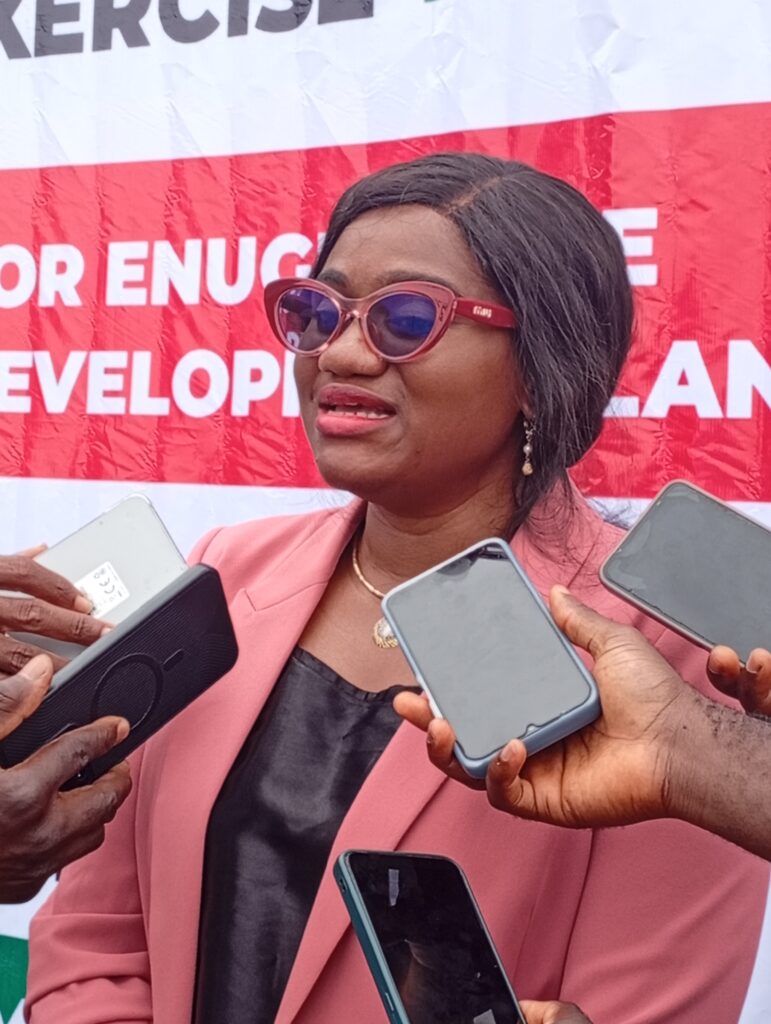
SSA to the Governor on SDGs,Onyinye Akubuilo-Okpalanma
He urged participants to provide accurate, relevant and representative information to ensure that the resulting plan reflected realities across Enugu State.
Onyia commended the Ministry of Budget and Planning, consultants, development partners and technical teams for their contributions to strengthening the state’s development planning framework.
Onyia stressed that the ultimate value of the plan would be measured not by the quality of its presentation but by its impact on people’s lives, including better schools, accessible healthcare, decent jobs, improved infrastructure, stronger communities and expanded economic opportunities.
He urged participants to work collectively towards a development pathway that would benefit present and future generations.
In a goodwill message, the Senior Special Assistant to the Governor on Sustainable Development Goals (SDGs), Onyinye Akubuilo, called for the integration of the Sustainable Development Goals into the Enugu State Development Plan to strengthen the alignment of government policies, programmes and budgets with measurable development outcomes.
Akubuilo, who also serves as Secretary of the State Steering Committee for the development plan, said integrating the SDGs would help the government move beyond isolated projects towards a coordinated approach to sustainable development.
She explained that the global goals provide a common framework for addressing critical sectors, including education, healthcare, agriculture, infrastructure, economic growth, environmental sustainability, gender equality and institutional development.
According to her, aligning the development plan with the SDGs would strengthen the connection between planning, budgeting, implementation and monitoring, thereby improving accountability and the delivery of public services.
She stressed that the state’s budget should serve as an instrument for delivering development rather than merely a financial document, insisting that every allocation should contribute meaningfully to established priorities and improve the welfare of residents.
Akubuilo urged stakeholders to bring their knowledge, experiences and perspectives to the exercise, noting that an inclusive and evidence-based plan aligned with the SDGs would provide a stronger foundation for sustainable and equitable growth.
She reaffirmed the SDG Office’s commitment to supporting the process and collaborating with relevant stakeholders to ensure that the state’s development ambitions translated into lasting benefits for its people.
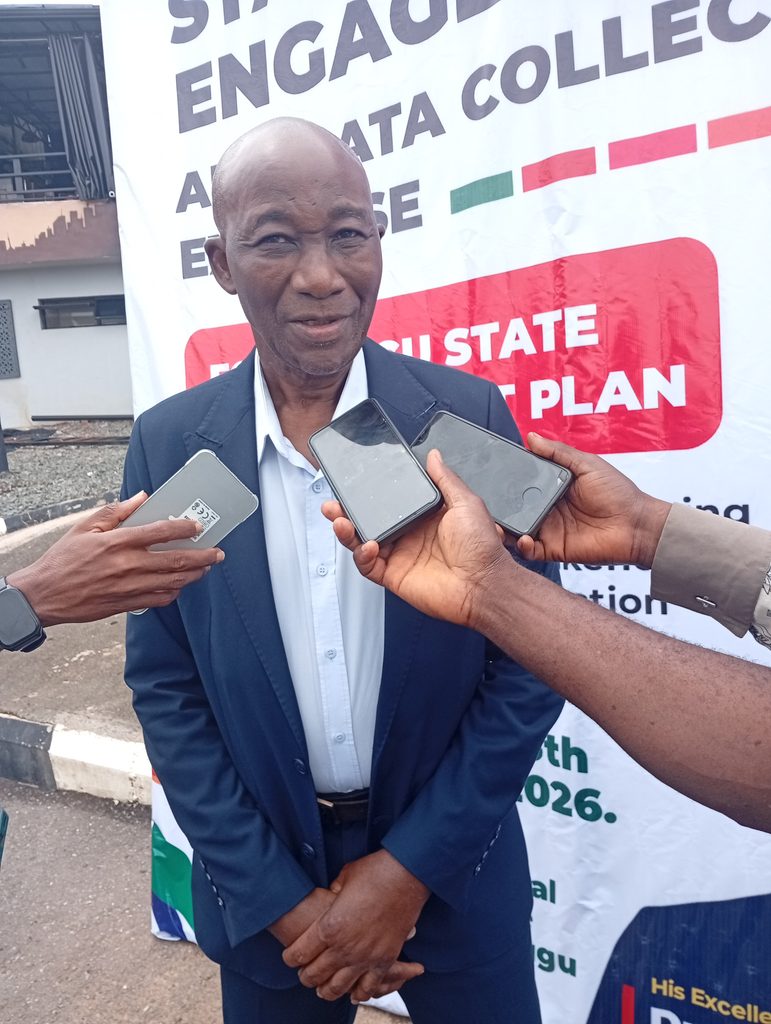
Commissioner for Budget and Planning,Chris- Robert Ozongwu
Earlier in his address, the Commissioner for Budget and Planning, Chris-Robert Ozongwu, noted that a major consideration in the proposed development framework is the alignment of the state’s priorities with the United Nations Sustainable Development Goals, which he aidcprovide a global framework for tackling poverty, improving health and education, expanding economic opportunities and protecting the environment.
He explained that the 17 SDGs, adopted under the UN’s 2030 Agenda for Sustainable Development, offer a framework through which Enugu can connect its development priorities with internationally recognised social, economic and environmental objectives while adapting them to local realities.
According to him, relevant goals include quality education, good health and well-being, clean water and sanitation, affordable and clean energy, decent work and economic growth, industry and infrastructure, reduced inequalities, sustainable cities and communities, climate action and strong institutions.He noted that the task is to translate these broad objectives into practical policies, measurable targets and projects that respond to the needs of its communities.
He described the engagement as a critical step towards building a prosperous and sustainable state, stressing that development planning must reflect the actual needs, experiences and aspirations of the people rather than remain a government document without tangible benefits.
The exercise is expected to provide an important framework for identifying community needs, setting development priorities and strengthening coordination among government institutions and ot