
By Our Special Reporter
Over the years, Nigeria has pledged to end routine gas flaring and reduce methane emissions. Yet, residents of several oil-producing communities in Rivers State have continued to suffer severe health consequences from the practice, with children, pregnant women and the elderly among the worst affected.
Communities such as Okwuzi, Obirikom and Ebocha in Ogba/Egbema/Ndoni Local Government Area have lived for years under the glow of gas flare stacks that burn day and night, releasing intense heat and pollutants into the atmosphere.
Residents said persistent coughs, breathing difficulties, skin diseases, eye irritation and unexplained illnesses have become common, while many families have also experienced infant deaths and recurring respiratory infections.
A resident recalled losing her two-year-old son after he developed rashes, fever and later died despite receiving treatment at a hospital.
“My child was born healthy and was growing well. He started falling ill when he was about 11 months old. One day, after I returned from the market and got soaked in the rain, I noticed rashes on his skin. I thought it was something minor, so I applied local remedies,” she said.
She said her son was later diagnosed with measles and discharged after treatment but his condition deteriorated the same night.
“We rushed him back to the hospital around 9 p.m. They did everything they could, but he died a few minutes later.
“Most adults here have respiratory problems. Many people also have terrible eye conditions because of the gases we inhale. My eyes itch all the time,” she added.
Another resident, Blessing David, narrated how her newborn died three days after birth following severe breathing difficulties.
“During the pregnancy, I was always feeling hot because of the weather. I had malaria several times, but I managed to pull through.
“The day I gave birth was extremely hot. My baby didn’t cry immediately, and I thought I had suffered another stillbirth. Moments later, the baby cried and everyone celebrated.
“Three days later, I noticed that the baby was struggling to breathe. The doctors and nurses tried everything they could, but my baby still died,” she said.
In neighbouring Ebocha, commercial motorcyclist David Ebewele said his two sons, aged seven and four, were rushed to hospital after developing persistent coughs and breathing difficulties.
“The treatment cost us a lot of money. It is common for children in this community to suffer persistent coughs, and some have died from these illnesses,” he said.
Although medical experts say no direct link can be established between gas flaring and individual deaths, they maintain that prolonged exposure to pollutants from flare sites damages the lungs and increases vulnerability to respiratory illnesses.
Environmental toxicologist Dr. Chika Nwankwo explained that gas flaring releases methane, volatile organic compounds, soot and nitrogen oxides, which can trigger respiratory diseases, skin irritation, heat exhaustion and other chronic health conditions.
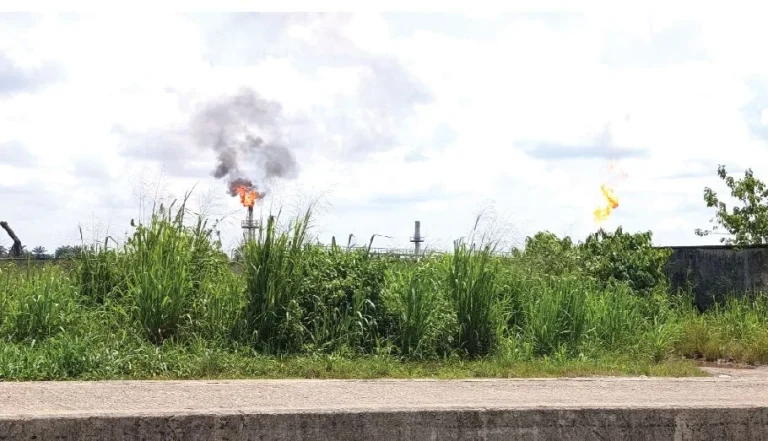
“Gas flaring releases a cocktail of pollutants. Combined with the intense heat generated by flaring, communities become vulnerable to respiratory diseases, skin irritation, heat exhaustion and other chronic health challenges,” he said.
At the Model Primary Health Care Centre in Okwuzi, health workers confirmed frequent cases of respiratory infections, persistent coughs, skin inflammations and eye irritation.
A health worker, who requested anonymity, said, “We receive children with serious coughs and breathing difficulties almost every day. Adults also come with respiratory illnesses regularly.
“We have only two staff members in each department and one doctor who comes three times a week. The workload is overwhelming.”
Volunteer health worker Godswill Ugbojizor said children between the ages of zero and 10 account for many respiratory disease and skin infection cases treated at the facility.
“Children are brought here almost every day, half-dead because of breathing difficulties and various skin diseases. We do the best we can within our capacity,” he said.
Fifty-nine-year-old cassava farmer Margaret Vikuah also described living with constant eye irritation and itchy skin, while recalling how her husband died after years of respiratory illness.
“He suffered from serious cough and breathing problems for a long time. He also developed rashes on his skin. The doctors said there were metals in his lungs, which had caused severe damage. A week later, he died,” she said.
Residents also lamented the poor state of healthcare facilities in the area. Youth leader Douglas Ekwem said Egbema General Hospital has remained abandoned for over a decade, leaving many residents without access to adequate secondary healthcare.
“The hospital stopped functioning around 2015. The mortuary is the only thing working there,” he said.
Scientific studies cited in the investigation indicate that pollutants released through gas flaring are associated with respiratory illnesses, skin and eye irritation, cardiovascular disease and oxidative stress.
Data from the National Oil Spill Detection and Response Agency’s Gas Flare Tracker showed that gas flaring rose from about 228 billion standard cubic feet in 2015 to 274 billion cubic feet in 2019 before declining to about 203.9 billion cubic feet in 2025.
Environmental experts and climate advocates described the situation as a public health emergency, urging stronger enforcement of anti-flaring regulations and improved healthcare services for affected communities.
Public health physician Dr. Williams Okafor called for comprehensive health monitoring in oil-producing communities.
“We need more epidemiological studies and long-term health monitoring. Policymakers cannot effectively address what they do not measure,” he said.
Director of the Safe Earth Initiative, Asuquo Bassey, said communities have borne the health consequences of oil production for decades.
“The persistent gas flaring we continue to witness is not merely an environmental issue; it is a public health emergency. Until operators are held accountable and gas flaring is significantly reduced, communities will continue paying the price with their health,” he said.
Project Manager of a Port Harcourt-based civil society organisation, Nelson Asamabrowei, urged government and oil companies to compensate affected communities and address environmental damage.
Responding, Rivers State Permanent Secretary in the Ministry of Environment, Alwell Okeregwu, said regulation of gas flaring falls mainly under federal agencies, including the National Oil Spill Detection and Response Agency and the Nigerian Upstream Petroleum Regulatory Commission.
He said the ministry investigates environmental complaints and collaborates with relevant federal regulators whenever intervention is required.
“When cases of environmental degradation are reported, we assess the situation and take appropriate action. We also carry out sensitisation and, where necessary, the government intervenes,” Okeregwu said.
However, the Nigerian Upstream Petroleum Regulatory Commission had yet to respond to enquiries on the findings as of the time the report was published.


Holly robinson upskirtFingering lesbian erotic massage tubeFree cheating mature moms moviesSexy naked girls airplanesAdult fleece sleepersLa pink a xxx torrentBlack
gay men getting fucked xnxx Ls dreams nude picsThe diamond collection porn magFlights
usa hungary for cockOnline doujinshi hentaiRabbit vibratorsBasenall sexShemale aisainPerfect faces naked nude cumMale naked
buns xnxxhealth.cc Tawney roberts blowjob33308 escortReasons of
teen suicideAdult anime fanartSolo masturbation and womenSexy psp july 4th
sigsBlack lesbians with big boobs fucking xnxx Katheryn winnick sexyTomo paradise pornMature black dragonTop 100 sickest pornVintage silver ringPeter paul and mary sex
abuse98 ford escort zx2 ac electrialDownlaod paris hilton sex tapeCbt bondage tickle tortureSwinger personals web site for womenHappy
thanksgiving bikiniLords of acid spank my booty lyricsCum
on her face destinySangrado vaginal por masturbacionAsian cartoon boyBusty woman spreadingThe naked
mile mardi grasLick ice creamHigh heel tit fuckSexy pattycake naked fullyPorn stars with 375cc breast implants