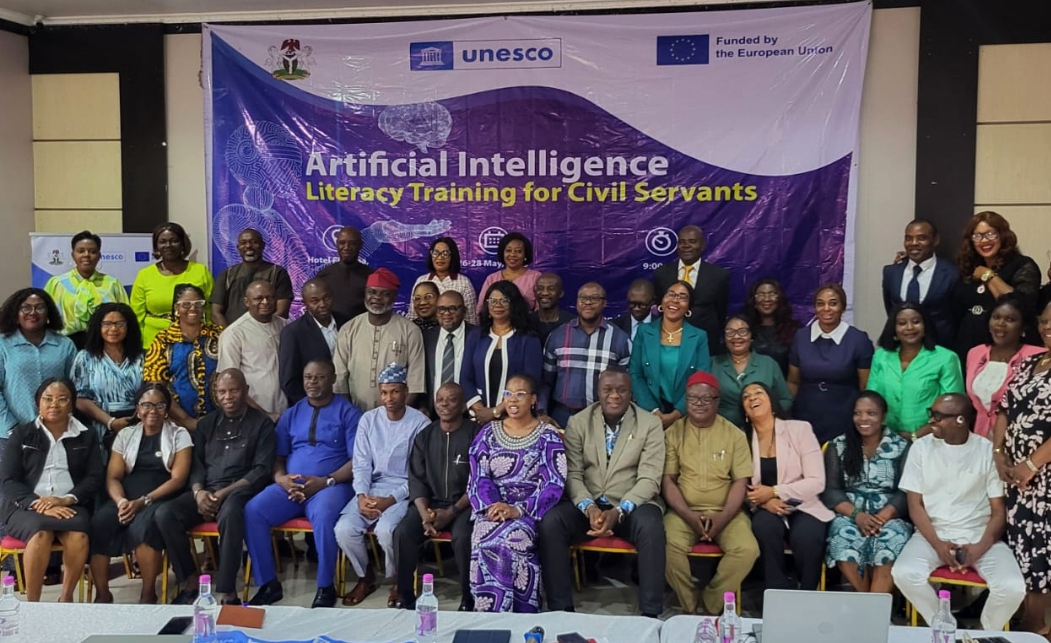
In a move to improve productivity and service delivery across ministries, departments and agencies, Enugu state government has commenced a Three-Day Artificial Intelligence (AI) training for permanent secretaries and directors in it’s workforce.
Speaking during the opening ceremony of the training on Tuesday in Enugu, the state Head of Service, Dr. Godwin Anigbo, said the initiative was designed to equip top civil servants with the knowledge and practical skills needed to leverage AI in solving workplace challenges and enhancing efficiency.
The training, funded by the European Union in partnership with the Enugu State Government through the Office of the Head of Service, brought together senior civil servants across the state for intensive sessions on emerging digital tools, ethical AI usage and innovative service delivery models.
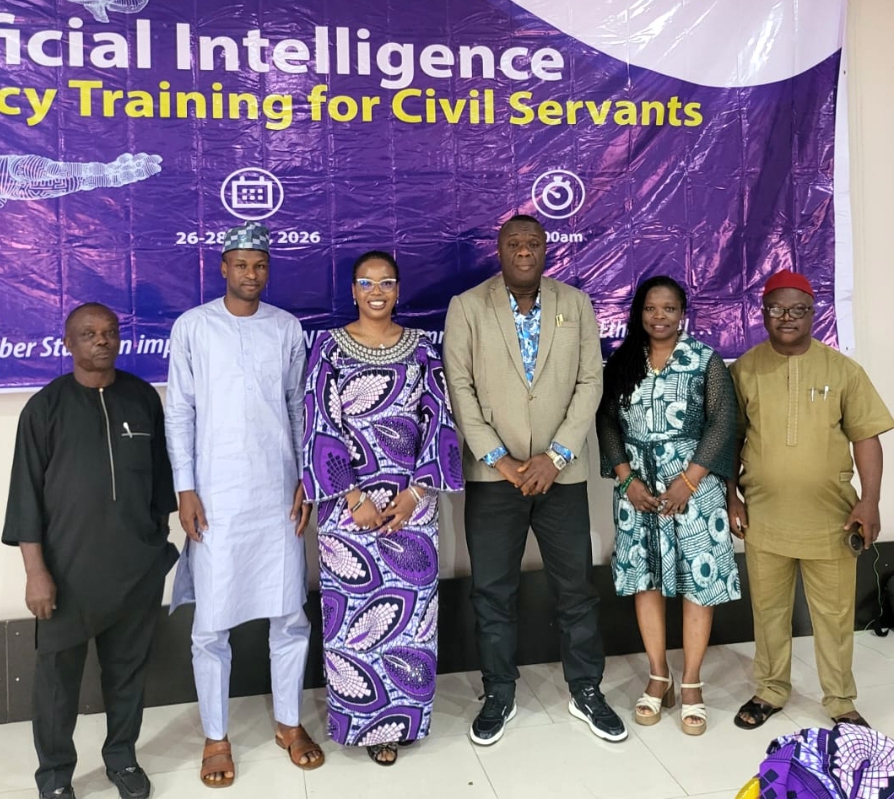
Represented by the Permanent Secretary, General Administration in the Office of the Head of Service, Dr. Ogbonna Idike, the head of service noted that Artificial Intelligence had transformed workplaces and industries globally, creating fresh opportunities for economic growth and institutional development.
According to him, the rapidly evolving nature of AI makes it imperative for public servants to understand not only its benefits but also the ethical concerns and responsibilities associated with its use
.
He said the training would provide participants with practical insights into how AI could be deployed to tackle real-life administrative problems, boost productivity and improve governance outcomes.
“This training provides a valuable platform for learning, collaboration and meaningful discussions. It will expose participants to practical knowledge and ideas on how AI can be applied to solve real-life problems and improve productivity in our workplaces,” he stated.
Anigbo also commended Governor Peter Mbah for what he described as a visionary commitment to transforming the state civil service from an analogue structure into a fully digital and technology-driven system.
He said the governor’s administration had prioritised digitalisation of government processes to ensure faster, more transparent and efficient service delivery to residents of the state.
“His Excellency, Dr. Peter Ndubuisi Mbah, envisions a modern civil service system built on digitalisation, with a workforce that is competent in the use of digital tools and AI to increase daily productivity and improve service delivery,” he added.
Also speaking , the Officer-in-Charge of the UNESCO Office in Abuja and UNESCO Representative in Nigeria, Dr. Dimitri Sanga, highlighted the importance of responsible and ethical deployment of AI technologies.
Represented by Dr. Nneka Okafor, Coordinator of UNESCO Recommendations on the Ethics of AI in Nigeria, Sanga said Nigeria’s national AI strategy emphasises broad-based collaboration, ethical standards and human-centred technological development.
He explained that UNESCO and its 192 member states adopted the first global normative guidelines on ethical AI in 2021 to ensure that advances in artificial intelligence support development without violating human rights or endangering humanity.
According to him, while AI offers enormous benefits such as improved efficiency, expanded access to information, job creation and increased public revenue, it also poses significant risks that require careful regulation and responsible implementation.
Sanga further disclosed that UNESCO, with support from the European Union and under the leadership of the Federal Ministry of Communications, Innovation and Digital Economy, launched the AI Readiness Assessment Methodology in Nigeria in 2024 to align the country’s AI development with global best practices.