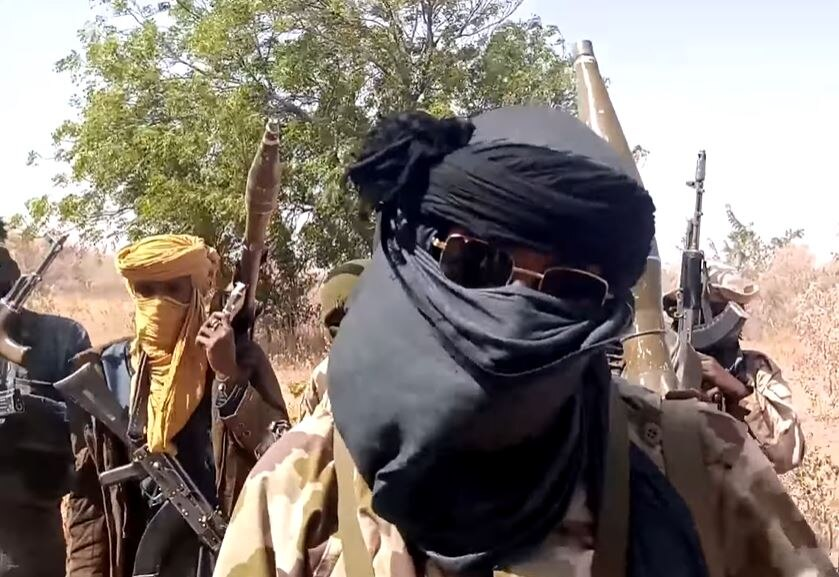
Nigerians have called for an immediate enforcement of sanctions against sponsors of terrorism attacks in Nigeria.
This followed the Federal Government’s release of an updated list of 48 individuals and 12 entities allegedly linked to terrorism financing.
Security experts warn that failure to act could undermine confidence in Nigeria’s counterterrorism efforts.
The list, published on Saturday by the Nigeria Sanctions Committee, is one of the most extensive disclosures in recent years, targeting suspected financiers of violent groups operating across the country.
Among those named are Finland-based factional leader of the Indigenous People of Biafra, Simon Ekpa, and Desert Herald publisher, Tukur Mamu.
Also listed are groups such as Boko Haram, Islamic State West Africa Province, and Indigenous People of Biafra, alongside entities including West and East Africa General Trading, Settings Bureau De Change Ltd, and the Lakurawa Sect.
The development comes as the government reports securing 386 convictions out of 508 terrorism-related cases, despite continued attacks in states such as Borno, Kebbi, Kwara, and Zamfara.
Security analysts and retired law enforcement officials stressed that publishing names alone is insufficient without decisive follow-up action.
A retired Assistant Inspector-General of Police, Salami Abduraheem, said the credibility of the exercise would depend on tangible outcomes such as arrests and prosecutions.
“Publishing a list is only the beginning. The real test is what happens next: arrests, prosecution, and convictions,” he said, warning that failure to act promptly could signal weakness in the system.
Former security director, Abdullahi Adeoye cautioned that delays could allow suspects to evade capture.
“Once names are public, suspects are alerted. Immediate steps like freezing accounts and restricting movement are critical,” he said.
Analysts also raised concerns about Nigeria’s capacity to successfully prosecute high-profile terror financiers.
Security expert Musa Aliyu described the move as overdue but pointed to weaknesses in the criminal justice system.
“It shouldn’t just stop at releasing names. The legal system must be strengthened to ensure due diligence and effective prosecution,” he said, urging legislative reforms.
Legal practitioners added that successful prosecution requires strong, admissible evidence, including financial records and witness testimony, while warning that prolonged court processes could weaken cases.
Attorney-General of the Federation and Minister of Justice, Lateef Fagbemi, disclosed that 386 convictions had been secured from 508 terrorism cases, noting that the figures should serve as a deterrent
Civil society groups welcomed the transparency but insisted that it must be matched with accountability.
Security governance expert Shola Muse warned that without concrete action, the move could be perceived as symbolic.
“If the government is serious, it must demonstrate decisive action. Otherwise, it becomes a media exercise,” he said.
Another analyst, Kemi Babatunde, noted that public confidence had been eroded by past experiences.
“Nigerians have seen lists before. What they want now is visible, measurable action,” she said.
Many Nigerians took to social media platforms such as Facebook and X to demand swift prosecution of those named.
Some called for immediate investigations, arrests, and asset freezes, stressing that only concrete action would demonstrate government commitment.
Under Nigeria’s Terrorism (Prevention and Prohibition) Act, authorities have the legal backing to prosecute terror financiers.b Experts cited systemic issues such as weak inter-agency coordination, judicial delays, and possible political interference as major obstacles..
Despite this, analysts insist that the effectiveness of the government’s strategy will ultimately depend on its ability to dismantle financing networks and ensure that those named are brought to justice.