
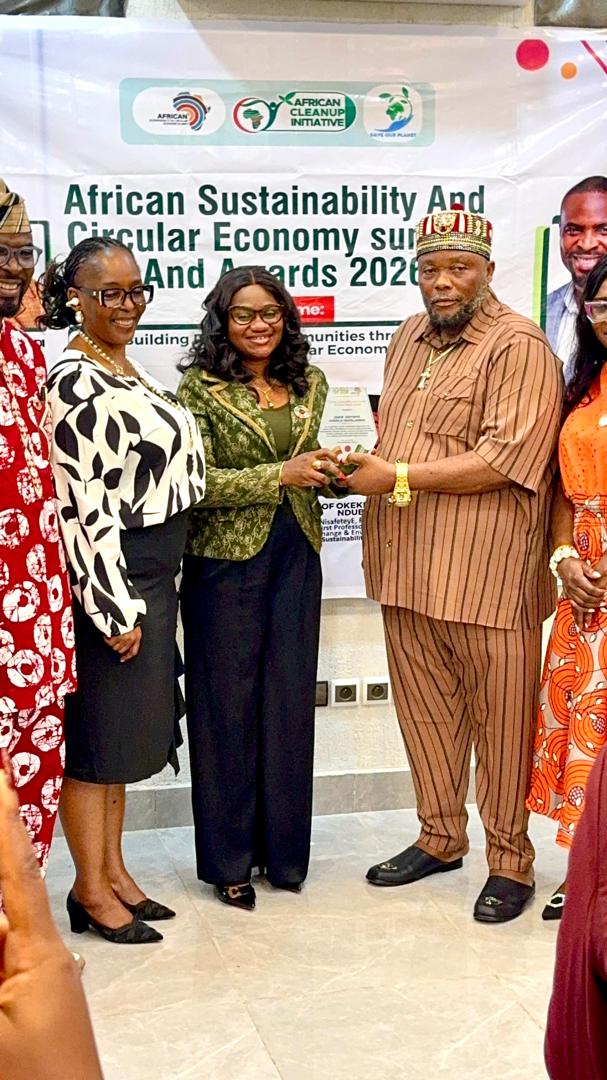
Enugu State’s Sustainable Development Goals (SDGs) Focal Person, Onyinye Akubuilo-Okpalanma, has received a continental award for her contributions to sustainable development, showcasing the state’s Smart Green Schools Project as a model for localising the SDGs at the grassroots.
Akubuilo-Okpalanma, who is also the Senior Special Assistant to the Governor on Sustainable Development Goals, was honoured at the African Sustainability and Circular Economy Conference in Cotonou, Republic of Benin, where she delivered a lecture on “Localizing the SDGs for Community Impact.”
Using Enugu’s Smart Green Schools Project as a case study, she demonstrated how a single, well-designed intervention could address multiple development challenges rather than treating the 17 SDGs as separate projects.
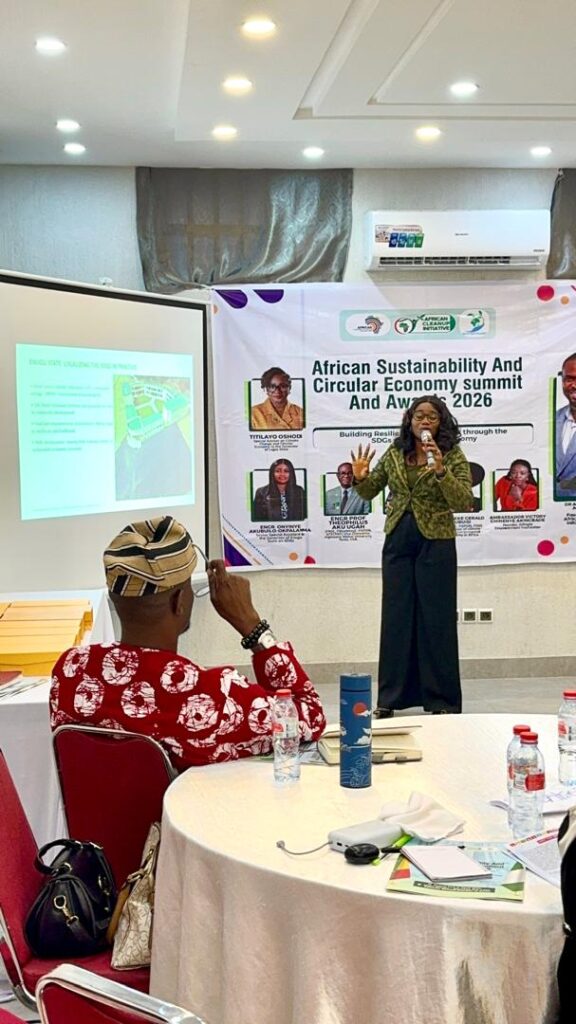
Okubuilo-Okpalanma says major lesson from Enugu was that localising the SDGs did not require 17 separate projects for the 17 goals
She explained that the Smart Green Schools initiative goes beyond the construction of classrooms, integrating education, healthcare, nutrition, technology, clean energy, agriculture, inclusion and environmental sustainability into the school environment.
According to her, the project advances SDG 1 on No Poverty by reducing barriers to quality basic education; SDG 2 on Zero Hunger through school feeding and smart agricultural facilities; and SDG 3 on Good Health and Well-being through school-based health clinics.
She said the project also promotes SDG 4 on Quality Education through modern classrooms, science laboratories, ICT centres, interactive learning technologies and innovation spaces.
Akubuilo-Okpalanma noted that the schools promote gender equality, clean water and sanitation, renewable energy, decent work and economic growth, while providing modern infrastructure and technology that advance innovation and reduce inequality.
She further linked the initiative to sustainable communities, responsible consumption, climate action and protection of life on land through green practices, environmental education, solar power and sustainable agriculture.
The SDG Focal Person stressed that the major lesson from Enugu was that localising the SDGs did not require 17 separate projects for the 17 goals.
Rather, she said, carefully designed interventions could generate multiplier effects across several development targets while delivering direct benefits to communities.
She added that the Enugu experience demonstrated how subnational governments could translate the global SDG framework into practical projects that citizens could experience in their everyday lives.
The high point of the conference was the presentation of an award of recognition to Akubuilo-Okpalanma for her contributions to sustainable development and the advancement of the SDGs.
Receiving the award, she dedicated it to the Enugu State Governor, Dr. Peter Ndubuisi Mbah, acknowledging his administration’s commitment to translating development policies into impactful projects and initiatives that improve citizens’ lives.
She said the recognition also represented an acknowledgement of the broader development vision of the Enugu State Government and the collective efforts of the administration towards sustainable and inclusive development.
Her participation at the conference further enhanced Enugu State’s visibility in continental discussions on sustainability, circular economy, climate action and the localisation of the SDGs.
Akubuilo-Okpalanma said the SDGs should not remain limited to global conferences and policy documents, stressing that their real impact must be felt in schools, homes, farms, communities and institutions.
At the Cotonou conference, she presented Enugu’s Smart Green Schools Project as a practical example of how global development goals can be translated into tangible community impact.

Best platform I have used in the Philippines so far. The local support is helpful and the games run perfectly on my phone. phj77game
Been using bdctg999 for a few weeks now. The customer support is actually helpful and they respond fast. It feels like a trusted place to play. bdctg999