Nigerian’s President, Bola Tinubu says his administration is committed to boosting the country ‘s economy , announcing a ₦1 trillion investment in solid minerals sector.
He made the announcement while delivering the keynote address at the 10th Edition of Nigeria Mining Week 2025, in Abuja, through the Secretary to the Government of the Federation, Senator George Akume.
Tinubu noted that the ₦1 trillion commitment, which is the largest government-led mining initiative in the nation’s history, was drawn from the ₦4.5 trillion increase in the 2025 federal budget.
The President said the landmark investment, which was in alignment with his administration’s Renewed Hope Agenda, will fund geo-scientific exploration, geological surveys, and critical infrastructure needed to unlock mineral-rich regions.
“This is the most significant single investment in Nigeria’s mining industry by any administration,” adding that, “We are turning the wealth beneath our feet into prosperity in our hands.”
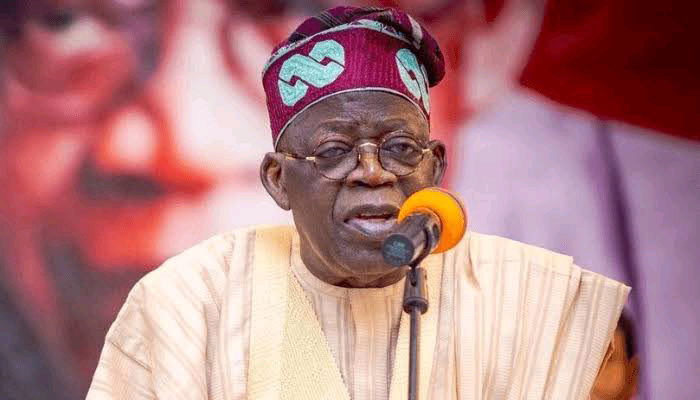
Pix: President Tinubu
Commending the sectoral progress made, Tinubu noted that the revenue generation of the sector grew sixfold from ₦6 billion in 2023 to ₦38 billion in 2024.
He, however, attributed the brilliant performance of the sector to new policies, tighter regulations, and the establishment of the Nigeria Solid Minerals Company, a special-purpose vehicle designed to attract capital, form joint ventures, and boost local mineral processing.
The President then re-emphasised his administration’s zero tolerance for unsafe or environmentally harmful mining practices, stressing that “natural resources must enhance lives today and for future generations. Mining should heal and build, not hurt or divide.”
Reaffirming the National Assembly’s support for the sector, Chairman Senate Committee on Solid Minerals, Senator Ekong Sampson, expressed readiness of the legislative arm to provide legislative backing for the President’s mining reforms.
He assured that the Senate would continue to enact progressive laws and provide oversight to sustain investor confidence and transparency. “Our focus is to unlock the full potential of this sector through enabling policies and strategic partnerships.”
Sampson then expressed optimism that ongoing reforms under the Ministry of Solid Minerals Development would position Nigeria for global competitiveness.
He, however, identified collaboration among government, industry players, and communities as the only way to achieve inclusive growth.
He said, “What we need for every sector is collaboration, not conflict,” adding that, “We have no excuse not to make the best of our country’s natural endowments.”
In his address, Minister of Solid Minerals Development, Dr. Dele Alake, described the sector’s rapid growth, now contributing about 4.6 percent to Gross Domestic Product (GDP), as proof of the effectiveness of President Tinubu’s reform-driven agenda
“From all available evidence, our policies are working. But we couldn’t have achieved this without the cooperation of stakeholders,” he said.
Alake then disclosed that the federal government is addressing two major financial gaps limiting local participation, particularly through the African Joint Committee (AJC) framework, to empower indigenous investors to compete with international players.
On his part, the Minister of Steel Development, Prince Shuaibu Abubakar Audu, reaffirmed the Federal Government’s determination to revive Nigeria’s steel industry as a backbone of industrialization and infrastructure expansion.
He revealed that a Memorandum of Understanding has been signed with a Chinese firm for the rehabilitation of the Ajaokuta Steel Plant, targeting the production of 10 million metric tonnes of steel by 2030. “With the right partnerships and renewed investor confidence, Nigeria’s steel industry will soon take its rightful place as the bedrock of national development,” he said.
The Permanent Secretary, Ministry of Solid Minerals Development, Engr. Faruk Yabo emphasized the Ministry’s commitment to building a transparent, technology-driven, and investor-friendly mining environment.
Yabo noted that the various reforms introduced under Alake’s leadership are repositioning the sector to meaningfully contribute to national GDP while promoting responsible mining.
“Our goal is to ensure Nigeria no longer exports raw minerals but value-added products that create jobs, foster innovation, and strengthen prosperity,” Yabo stated
Dr. Orji Ogbonnaya Orji, Executive Secretary of the Nigeria Extractive Industries Transparency Initiative (NEITI), stressed the importance of transparency and accountability in building investor confidence.
He stated that NEITI’s latest report shows the mining sector still underperforms due to poor data management and weak inter-agency coordination.
“Transparency is not an option; it is the foundation upon which trust and investment confidence are built,” Dr. Orji said, pledging NEITI’s continued support for reforms that guarantee fairness and shared prosperity.
Earlier, the National President of the Miners Association of Nigeria, Dele Ayanleke, expressed the association’s unwavering commitment to the promotion of a collaborative, transparent, and sustainable partnership with government and other stakeholders in the sector.
He noted that the progress recorded in the sector was made possible by the exemplary leadership of the Minister of Solid Minerals Development, Dr. Dele Alake, and his team.
He said the mining week has remained a catalyst for sectoral dialogue, innovation, and reforms — bridging the gap between policy and practice, operators and investors, and ideas and implementation.
According to him, the sector in the last decade witnessed the introduction of cutting-edge technologies, policy reforms, strategic partnerships, and capacity-building initiatives that continue to redefine the mining landscape in Nigeria. .
Author: Maureen Ikpeama