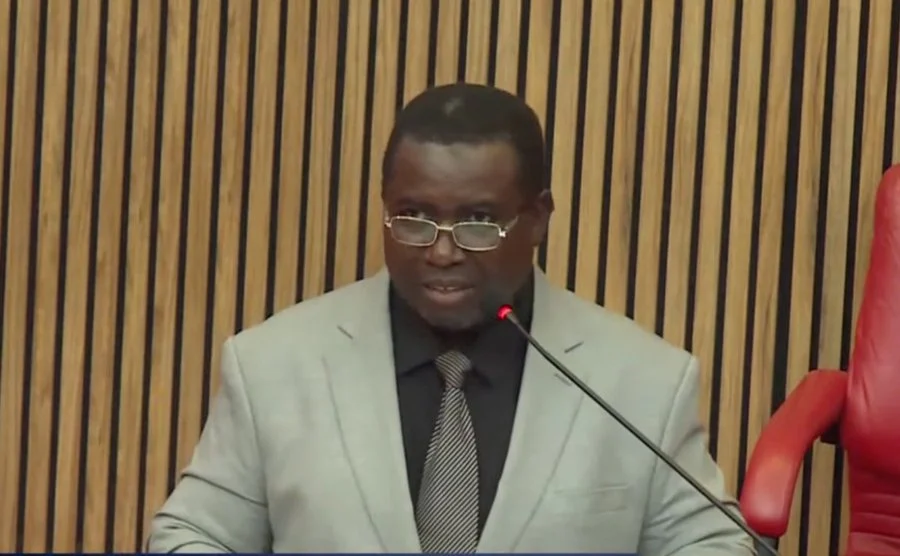
Chairman of the Independent National Electoral Commission (INEC), Prof. Joash Amupitan, says the commission will conduct a nationwide mock presidential election ahead of the 2027 general elections to test its result transmission system and other technological infrastructure.
He made this known on Sunday during the Citizens’ Townhall on the Electoral Act 2026 held in Abuja.
Speaking at the meeting, Amupitan assured Nigerians that the commission was determined to deliver what he described as the country’s best election yet.
According to him, the planned mock exercise will help the commission identify and fix possible technical challenges before the main presidential poll, especially in the area of electronic transmission of results across states.
“Election anywhere in the world is now about technology, but before deploying any technology, it is important to test it thoroughly,” Amupitan said.
He explained that while the Bimodal Voter Accreditation System (BVAS) was tested during off-cycle governorship elections such as those in Osun and Ekiti before the 2023 general elections, it was not sufficiently stress-tested on a nationwide scale during the presidential poll, which led to technical hitches in some areas.
The INEC chairman expressed confidence that the glitches recorded during the 2023 presidential election would not recur in 2027.
“The glitch is eliminated; by God’s grace, it will not surface in Nigeria,” he said, noting that apart from delays in some locations, there was no outright failure of result transmission in other elections conducted by the commission.
INEC had earlier fixed the Presidential and National Assembly elections for February 20, 2027, and the Governorship and State Houses of Assembly elections for March 6, 2027. However, the commission later revised the timetable.
Under the new schedule, the Presidential and National Assembly elections will now hold on January 16, 2027, while the Governorship and State Houses of Assembly elections are slated for February 6, 2027.
Amupitan stated that credible elections remain the lifeblood of democracy, adding that INEC was working to improve logistics and result management, which he described as key operational challenges.
He said network availability, rather than the concept of electronic transmission itself, remains a major hurdle, stressing that alternative manual collation methods provided in the amended law are only safeguards in case of unforeseen technical issues.
The development follows President Bola Ahmed Tinubu’s assent to the Electoral Act 2026, recently passed by the National Assembly as part of reforms aimed at strengthening the credibility and inclusiveness of future elections.
While supporters of the amended law have described the provision for both electronic and manual transmission of results as pragmatic, some opposition parties, including the African Democratic Congress and the New Nigeria Peoples Party, have criticised aspects of the Act, calling for further amendments ahead of the 2027 polls.
Amupitan, however, maintained that INEC is committed to transparency and assured Nigerians that the commission would work towards delivering a near-perfect election in 2027.