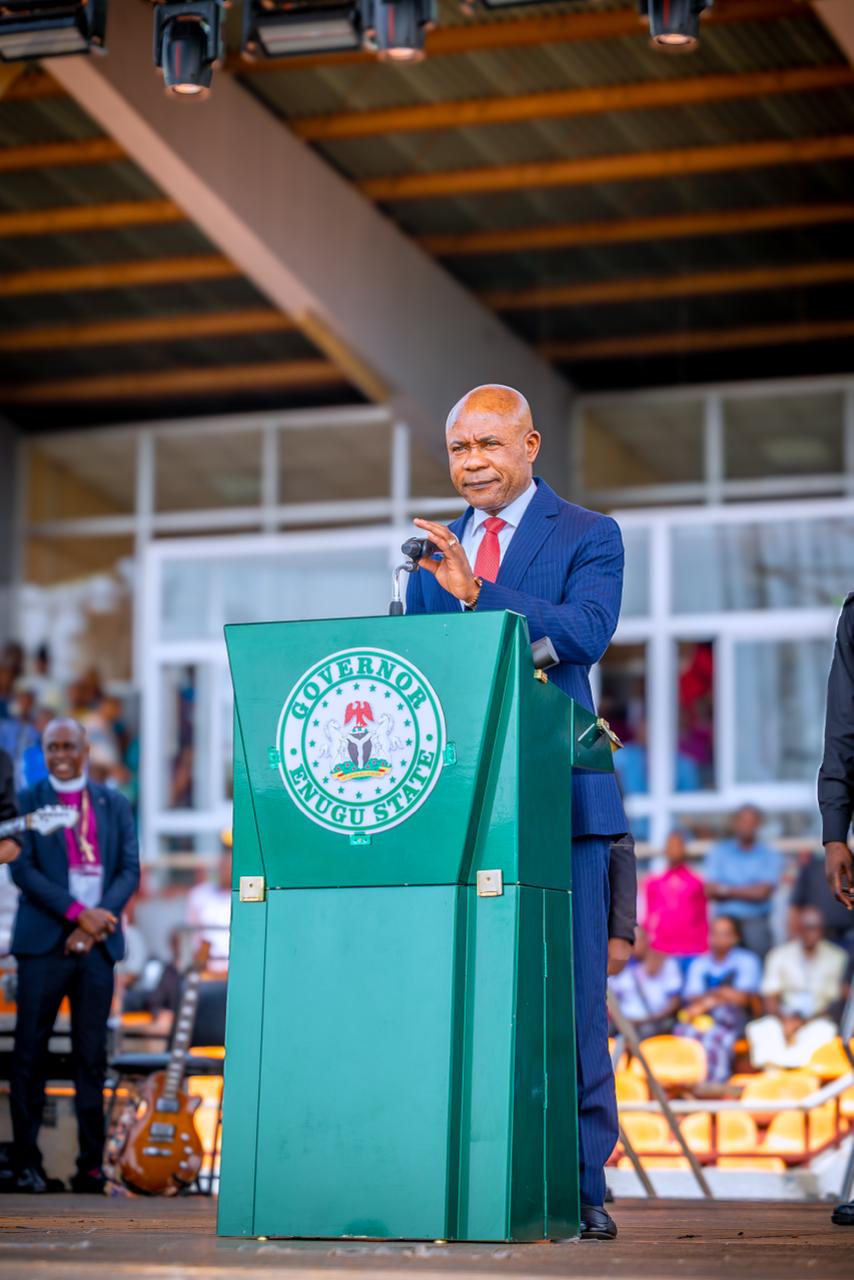

Governor of the Central Bank of Nigeria, Olayemi Cardoso, has reaffirmed the bank’s commitment to curbing inflation, describing its monetary policy stance as “steadfast” and impactful.
Speaking at the CBN Special Day during the ongoing 37th Enugu International Trade Fair in Enugu on Friday, Cardoso said the apex bank’s tight monetary policies have significantly reduced inflation over the past two years.
Represented by the Acting Director of Corporate Affairs, Hakama Sidi Ali, the CBN governor noted that inflation dropped sharply from a peak of 34.8 percent in May 2024 to 15.0 percent by the end of February 2026.
He attributed the progress to disciplined monetary strategies, improved investor confidence, and stronger external reserves. According to him, capital inflows and investments rose by nearly 200 percent between 2023 and 2025, while Nigeria’s external reserves climbed from under $10 billion to over $50 billion within the same period.
“Our fight against inflation has been steadfast, and we are beginning to see real results,” Cardoso stated, adding that the bank remains focused on achieving single-digit inflation in the near term while ensuring transparency and credible communication with the public.
However, stakeholders at the event called for further policy adjustments to support businesses.
President of the Enugu Chamber of Commerce, Industry, Mines and Agriculture, Nnanyelugo Onyemelukwe, commended the CBN’s efforts but expressed concern over persistently high interest rates.
Represented by council member Eric Chime, Onyemelukwe acknowledged the recent marginal reduction of the benchmark rate from 27.0 percent to 26.5 percent in February 2026 but insisted that lending rates remain too high for businesses to thrive.
He warned that the current high-interest regime could limit access to credit, slow productivity, and negatively impact economic growth.
He urged the apex bank to pursue more aggressive policies to ease liquidity constraints and support indigenous industries.
“The cost of funds and access to credit are critiqcal to productivity and GDP growth. There is an urgent need for policies that will encourage business expansion and protect local enterprises,” he said.
.