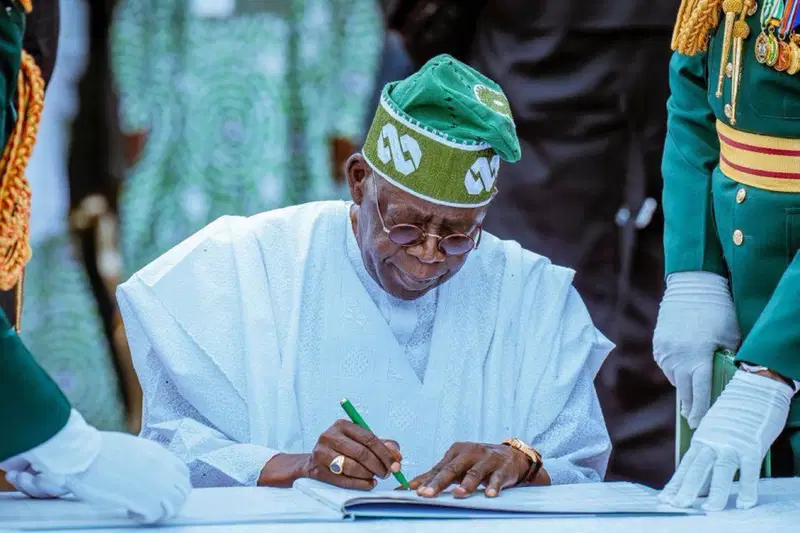
Some countries, including India, have reportedly refused to accept some ambassadorial nominees of President Bola Ahmed Tinubu due to diplomatic policies linked to the remaining tenure of the Nigerian administration.
Sources within the Presidency and the Ministry of Foreign Affairs disclosed that India has a standing policy that discourages accepting ambassadors from governments with less than two years left in office. The policy is said to be affecting the posting of Nigeria’s ambassador-designate to New Delhi, Ambassador Muhammad Dahiru.
Diplomatic sources explained that before an ambassador can assume duty in a host country, the receiving nation must grant an approval known as agrément. Without this consent, the envoy cannot be officially accredited.
An official familiar with the development said some countries were already sending signals of reluctance because the current administration is approaching the final phase of its tenure.
“They don’t usually accept an ambassador from an administration that has less than two years in office. Some countries believe the government may change after the next election, which could lead to a recall of the envoy,” the source said.
Another senior foreign service official confirmed that India’s policy may create difficulties but expressed optimism that Nigeria could leverage its diplomatic relationship with New Delhi to secure approval.
President Tinubu had on March 6 approved the deployment of 65 ambassadors-designate and high commissioners to different countries and international organisations. Among the nominees are former Aviation Minister Femi Fani-Kayode, who was posted to Germany; former presidential aide Reno Omokri, assigned to Mexico; former Chief of Army Staff Abdulrahman Dambazau, nominated for China; and Senator Jimoh Ibrahim, posted as Nigeria’s Permanent Representative to the United Nations.
So far, only two countries—United Kingdom and France—have reportedly granted agrément to Nigeria’s nominees, leaving the fate of the remaining envoys uncertain.
Foreign policy analysts say the situation is partly linked to Nigeria’s political calendar, as the next presidential election has been scheduled for January 2027 by the Independent National Electoral Commission.
Former Nigerian envoy to Singapore, Ambassador Ogbole Amedu-Ode, said the hesitation by host countries was largely pragmatic.
According to him, countries may be reluctant to receive ambassadors from a government that could face a change after an election within a short period.
Diplomatic observers also noted that the delay in appointing ambassadors may have contributed to the challenge. Nigeria has operated many of its foreign missions without substantive heads since September 2023 when the Tinubu administration recalled about 83 ambassadors worldwide.
Another former envoy, Mohammed Mabdul, however argued that friendly nations may not outrightly reject Nigeria’s nominees but could be more cautious, particularly with political appointees whose tenure may be short.
The development could delay the Federal Government’s plan to fully restore ambassadorial representation in Nigeria’s 100-plus foreign missions across the world.