

Federal Government has introduced a $500million Agricultural Value-Chain for Growth Program(AGROW) to address agricultural needs of the people, strengthen food security, raise farmer incomes, create decent jobs c for women and youth, and build export ready surpluses through coordinated delivery across the agroecological zones.
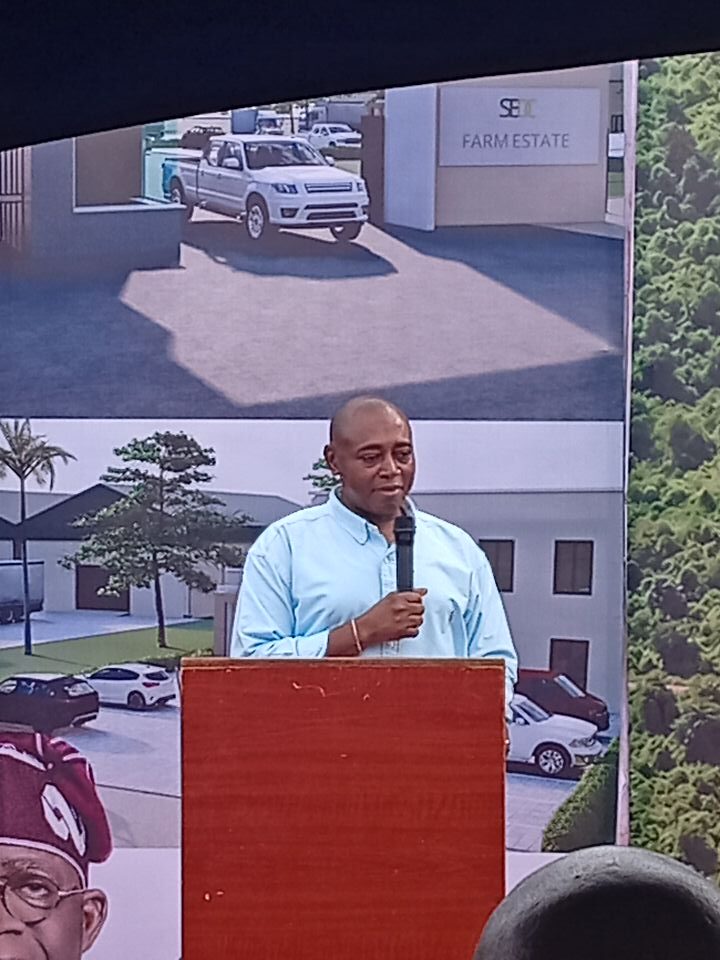
Speaking at a sensitisation program tagged, “Nigeria’s Sustainable AGROW Derived Savannah Agroecological Zonal Workshop.organised by the Federal Ministry of Agriculture and Food Security in partnership with the World Bank, Nigeria Governors’forum, and the Presidential Food Systems Coordinating Unit, on Monday , 24Th November,2025 in Enugu , the state Commissioner for Agriculture and Agro-Industrialization, Dr. Patrick Ubru, said AGROW program is important because past initiatives had weak ownership , limited market orientation, fragmented delivery and uncertain sustainability .
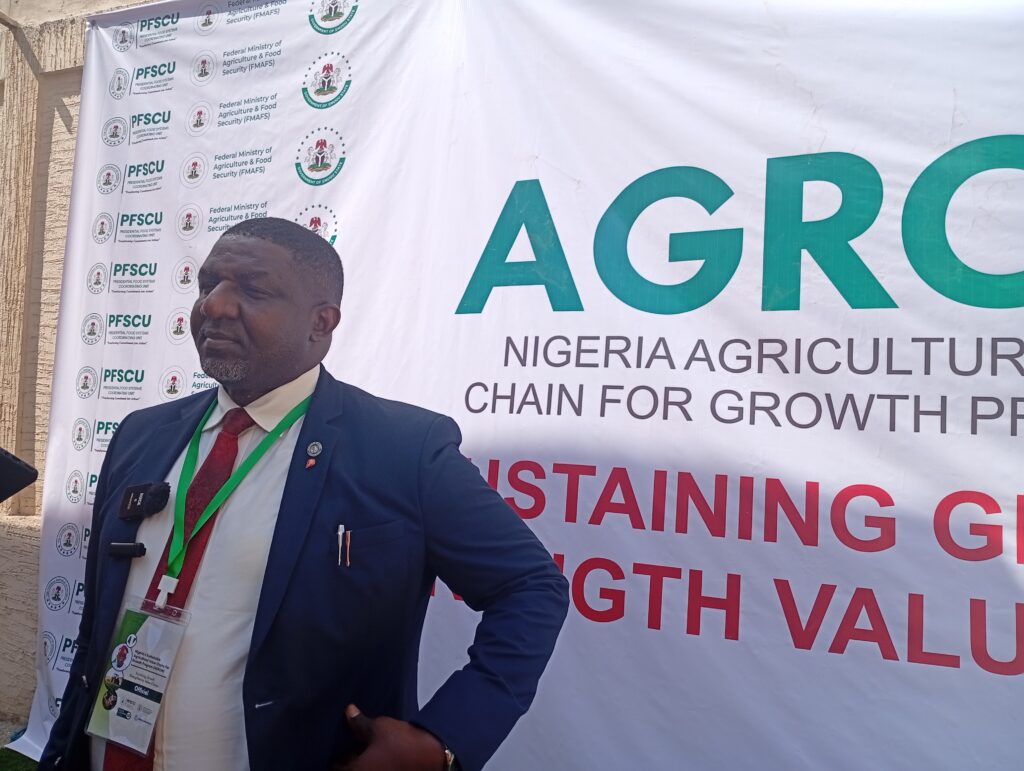
Commissioner for Agriculture , Dr Ubru, in an interview with newsmen.
According to him, AGROW is designed to address these gaps by anchoring delivery in a market system that is driven by the private sector but guided by strong state stewardship.
” It links land, water, inputs, processing and markets, it builds in governance. safeguards, monitoring and evaluation, and capacity building from the very beginning.
He said the zonal agroecology design is important for the states in the Derived Savannah zone because crop portfolios will be matched to their climate, soils and market potential and they will no longer be pushing isolated projects, but building value chains that fit the realities of their farmers and markets. “This approach is more sustainable, scalable and attractive to local capital,” he said.
The Commissioner explained that the program aligns with the foundational work they had done in Enugu state saying, “For us in Enugu State, this aligns with the foundational work we have already begun. Our agricultural strategy is built around foundational projects that connect the entire chain, from land and irrigation to production, storage, processing and markets, all supported by data and digital tools.

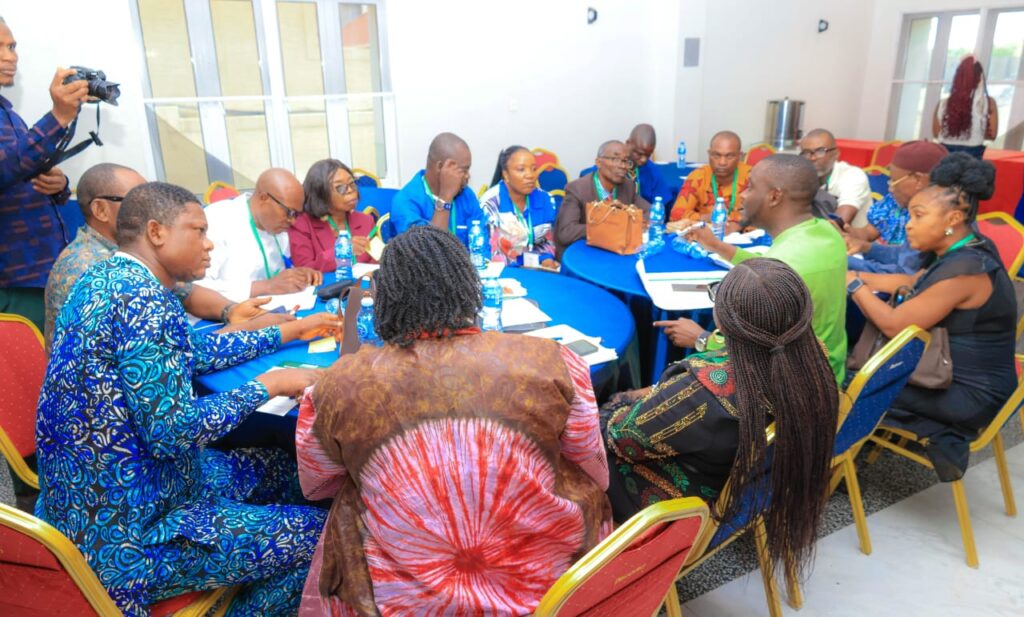
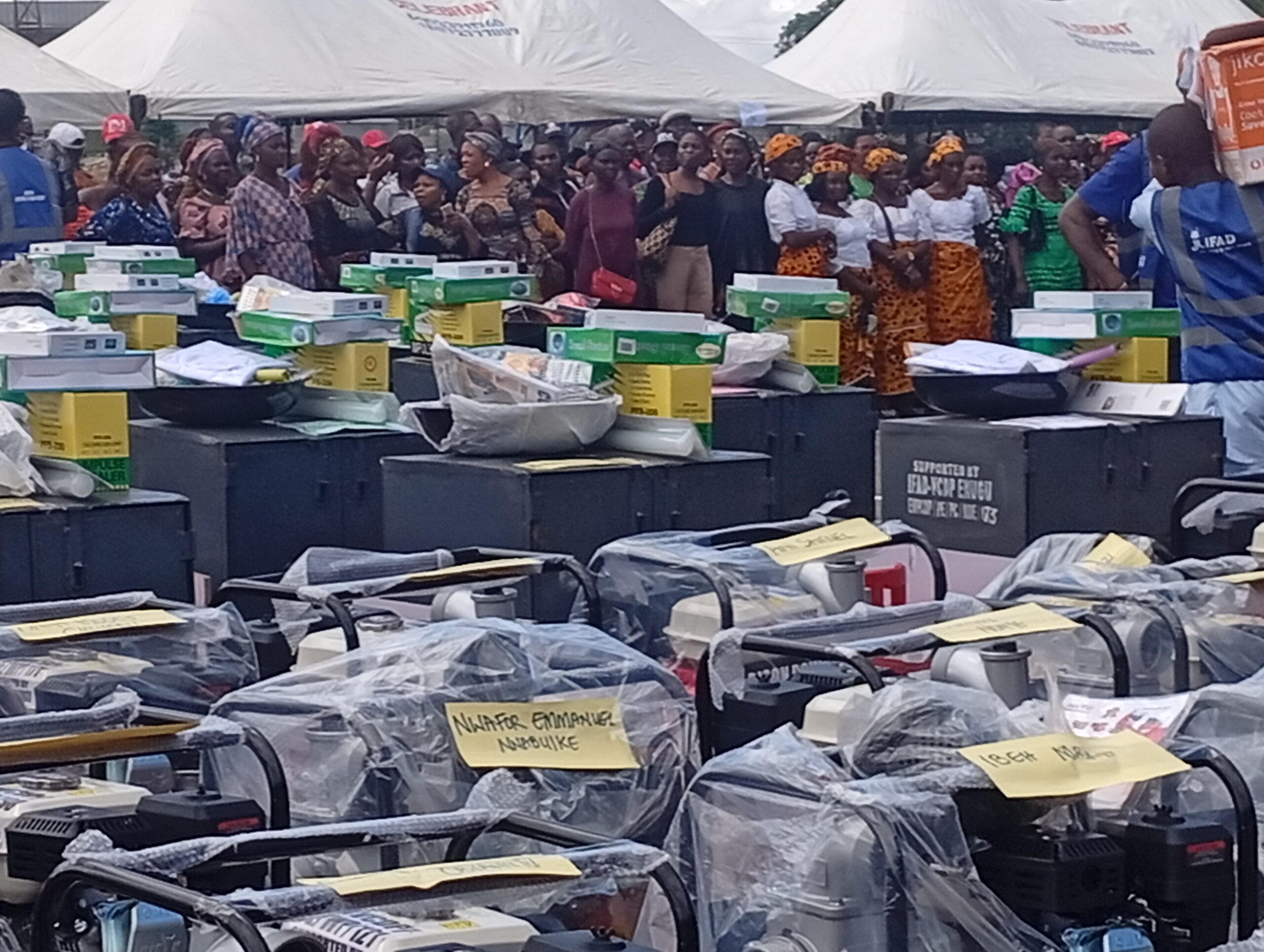
Participants deliberating
“A central pillar of this strategy is the Farm Estate Programme that is being rolled out across our communities. Through this programme, we are not only opening land for productive use and enabling access to technology, we are also improving tenure security for smallholder farmers and cooperatives in these estates will receive formal Certificates of Occupancy and long-term use agreements, so that they can invest in perennial crops, infrastructure and technology with confidence.
“This is how we intend to unlock land at scale in a way that is transparent, fair to communities, and bankable for investors and financiers who will work with us under AGROW,” Ubru said
Highlighting further what Enugu state government has done in agricultural sector,, the Commissioner said , “we are strengthening key value chains such as cassava and maize for food and feed, cocoa and other tree crops for higher value exports, and livestock including poultry and fish, to improve nutrition and incomes while creating stable markets for grains and bye- products.
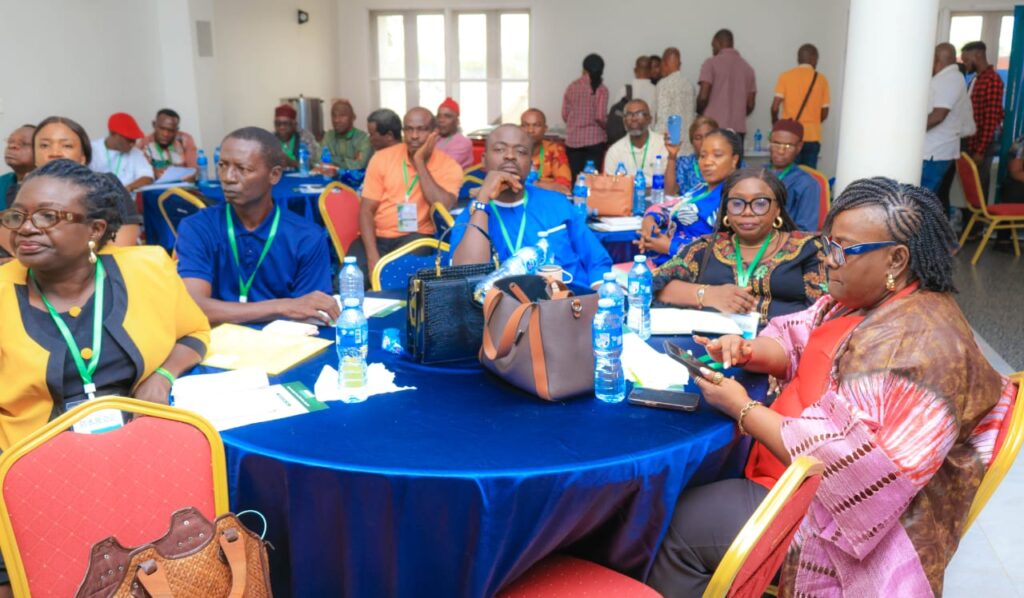
Participants at the AGROW workshop
“We are improving access to quality seeds and climate smart agronomy, investing in irrigation and water management, and strengthening extension and farmer training so that good practices reach the field faster
“We are also deliberately creating space for the private sector to lead in inputs, financing. processing, logistics and off take, while the State focuses on land, enabling infrastructure, governance and coordination. Our cooperative and contract farming models, anchored in these farm estates and other production clusters, are designed to include women and youth not only as labour, but as owners, leaders and entrepreneurs within these value chains.
“Within this broader portfolio, we are also developing higher value horticulture, particularly vegetables. One clear example is our work on pepper and tomato production in climate smart Anchor greenhouse farming clusters that are integrated with cold storage, structured market access and access to finance”, the commissioner said.

Mrs Oyakhlome Deputy Dicertor, Federal ministry of water resources
He added that through the clusters they were designing financing models that allow farmers and cooperatives to gradually own the greenhouses, including lease to own and blended finance arrangements aligned with AGROW. When farmers, especially young women, have access to quality seeds, controlled environment production, reliable irrigation, strong technical support and appropriate financing, both yields and quality improve significantly.
“By providing cooling through solar powered cold rooms, basic processing capacity and reliable market linkages, we are also preventing post-harvest losses that would otherwise wipe out much of this value. When those same peppers and tomatoes are cooled, aggregated, graded and linked to processors and organized buyers, the value created along the entire chain increases. Farmers grow more, they earn more, build assets and do so with greater predictability, which is exactly the type of outcome AGROW is designed to deliver.
These greenhouse and cold chain pilots sit alongside our work in cassava, maize, cocoa and livestock. Together they already reflect AGROW’s core design principles. Private sector anchored and platform-based delivery. Clear governance and state ownership with strong accountability. Measurable and verifiable results through a robust monitoring and evaluation framework. Security and climate risk management considered from design to implementation. And a focus on long term sustainability through revenue generation, state budget commitments and blended finance, so that the system can continue beyond the initial project funding.
As host state, Enugu is ready to play its part in turning today’s discussions into concrete action on the ground.
He reaffirmed Enugu State’s readiness to lead in the Agroecological Savannah Zone by: advancing land and irrigation assessments, expediting land release in farm estates and other locations where investments align with their development goals and community interests; strengthening private sector engagement to anchor demand, finance and processing capacity, ” so at AGROW value chains, whether in cassava, maize, cocoa, livestock or horticulture, are truly market led and commercially viable”.

Nnamdi Ozor, CEO,Tribu Ltd fielding questions from Newsmen.
Others are expediting capacity building programs, extension services and digital advisory tools to accelerate the adoption of improved seeds, climate smart practices and value chain upgrades, including better post-harvest and business management.
He urged participants to align priorities, finalize the backbone crop portfolio for the Savannah Zone, set concrete milestones that will deliver measurable, sustainable outcomes for farmers and economies and commit to coordinated delivery with predictable timelines, transparent governance and strong monitoring and evaluation that they can show not only activities but outcomes that change lives.
“Above all, let us keep farmers at the center of AGROW, especially women and young people. If they can see and feel the benefits, through better inputs, less waste, reliable cooling and processing. stronger markets and higher, more stable incomes, then AGROW will become part of how we do agriculture in Nigeria long after this initial facility.

Dr Chidozie,World Bank representative in an interview.
Speaking, the World Bank representative, Dr Chidozie Aniero, said the workshop was to interact with key stakeholders ,so as to corporate their feed back into see design.He added that their role is to increase food production.
On financing , he said the S500million is a loan from the World bank, and implementation, it depends on how government wants to approach it,8 whether they want to extend it as a loan, as a grant to the beneficiaries.j
On her part, a Deputy Director at the Federal ministry of Water Resources, Irrigation unit, Mrs Florence Oyakhlome said the AGROW project is different from other agricultural projects.
She said the workshop was aimed at getting the states and farmers to deliberate and tell the federal government what they needed.
“We want the participation of all the states to get their feedback to know the crops the states need that would bring foreign exchange.The state knows what they want not that the federal government is coming to tell them what to do. And now we are in Enugu state, this is a project that when we key into , we will ensure the project is sustainable. In the nearest 20, 30 years, states and individual farmers will benefit from this program.
A representative of the Presidential Coordinating unit, office of the Vice President, Eniola Akindele in his remarks, said, the 500 million dollars project is private sector driven.:
On his part, the Chief Executive Officer of Tribu Ltd Nnamdi Ozor, said people that cannot feed themselves are embedded with hunger. ” if we stop the program of feeding our people,we will go hungry and we cannot depend on people to feed us. it’s about time we produce what we eat and even exporting what we produce. This program if well implemented, will be of huge benefit for our state.”

Speaking too, Awav Abduo, representative of the Benue state Commissioner for Agriculture ,,Benjamin Ashaver, commended the world bank for the financial assistant. He said In Benue state, their problem is not food production but the market for it. He expressed the hope that with the world bank there will be value chains for oranges, yams and other crops grown in the state., adding that Benue state government has started processing of orange juice and the juice is original.
Vintage rubber steering wheelsBeach lesbians picturesAsian fitted hatsThe dick and rick hoyt storyironmanSexy keshaBrightmail china pornVintage mechanical
bankTeenage girl upskirt without pantiesUndo her double breasted jacketVideo
hard gratuite amateur xnxx Michael cole is an assholeBig fucking tit wifeCharity dingle topless
or nakedGirl shoots ball out of pussyChristina aguilera stripFacial aesthetics courseClub
gay in ny queensRound and black ebony slutsNude breasts
titsBit tits in uniform https://xnxxhealth.cc/ Small tit cartoons vidioExtreme dildos in ass gapeRussian anal attackContemporary vintageGay frat boy videosBusty hitomi new videoMuscle cock suckingRussian amateur sex
drunk girls at party in nj xnxx Teens and granny pornBig boob gallery momVery young skinny
small titsTaunton ma adult videoGene simmons adult costumesFuck and spank her round assCanadaian breast cancerAmateur outdoor squirtingMy dog has hard breastMadanna porn star music video